|
|
Blog Pages/Years

|
|
| |

.jpg) 
|
|
| |
DADASCALÌA-che bella parola, ma cosa significa e come
si traduce in inglese?

L’origine è l’istruzione data all’antico coro greco nella le tragedie e
nelle commedie;che comprende anche la disposizione dell’apparato
scenico. [La parola deriva da “istruzione”, “maestro”, e “insegnare”.
La definizione di didascalia dipende dall’ambito in cui la parola è usata:
1. Nell’opera drammatica o sceneggiatura di un film: sono le
annotazioni dell’autore o dello sceneggiatore riguardo alla
recitazione e scenografia; per esempio: le descrizioni precise
dell’impostazione degli attori; il tono delle battute; suggerimenti
di recitazione;ecc.
2. Nei film muti: le annotazioni che spiegano le scene o riportano il
dialogo inserite tra le scene.
3. Nei film parlati, specialmente in una lingua straniera: la
traduzione o trascrizione deldialogo in fondo allo schermo. Oggi è
più comune il termine “sottotitolo”.
4. In generale, nei film (muti o parlati): le informazioni che
compaiono all’inizio del film che includono il titolo del film e i nomi
di coloro che ci hanno preso parte. Oggi si usa “i titoli di testa”.
5. In libri, giornali, riviste: breve descrizione scritta situata sotto
un’illustrazione.
~~~~~~~~~~~~~~~~~~~~~~~~~~~~~~~~~~~~~~
DIDASCALÌA —what a beautiful word, but what does it mean and how
is it translated into English?
Its origins lie in the instructions given to the ancient Greek chorus in
tragedies and comedies; which also encompassed the staging. [The
word derives from terms meaning "instruction," "master," and "to
teach."]
The definition of didascalia depends on the context in which it is used:
1. In dramatic works or film scripts: notes by the author or
screenwriter regarding acting and set design; for example, precise
descriptions of actor positioning, the tone of lines, acting cues, etc.
2. In silent films: notes explaining scenes or conveying dialogue,
inserted between scenes. The term is “intertitles” in English.
3. In sound films/talkies, especially those in a foreign language: the
translation or transcription of dialogue at the bottom of the screen.
Today, the term "subtitle" is more common.
4. In general, in films (silent or talkies): information appearing at
the beginning of the film, including the title and the names of the
cast and crew. Today, the term "opening credits" is used.
5. In books, newspapers, and magazines: a brief written description
placed beneath an illustration: a caption.
Saturday, October 17, 2026
|
|
Ecco un altro falso amico: attenti TREMENDO non significa
“tremendous” in inglese. Di solito in inglese l’uso di
“tremendous” è positivo o neurtro, mentre in italiano
“tremendo” è quasi sempre negativo. |
L’aggettivo tremendo deriva dal verbo latino tremere,
(“tremare”) che è legato al timore reverenziale, alla paura o
a punizioni severe; significava letteralmente ciò "che deve
essere temuto" o "che fa tremare". Alle origini, la parola
era legata a un contesto religioso o solenne.
Esempio: Un castigo tremendo. [una punizione divina,
terrificante]
Durante i bombardamenti a Londra, Margaret
ha passato molte notti tremende in un rifugio antiaereo.
A differenza dell’inglese, in italiano tremendo significa
spaventoso, pauroso, o terribile. E il suo significato esteso
è: doloroso, difficile, gravissimo, disastroso, estremamente
negativo, insopportabile, spiacevole o molto brutto.
(Mamma mia quanta negatività!)
Esempi:
Il terremoto ha causato una disgrazia tremenda.
[disastrosa]
La perdita della madre le ha causato un dolore
tremendo. [gravissimo],
In Italia, durante l’estate del 2026 c’era un caldo tremendo.
[insopportabile]
A teatro ieri ho visto uno spettacolo tremendo.
[bruttissimo]
All’colloquio ieri, Irene ha fatto una figuraccia
tremenda. [estremamente spiacevole]
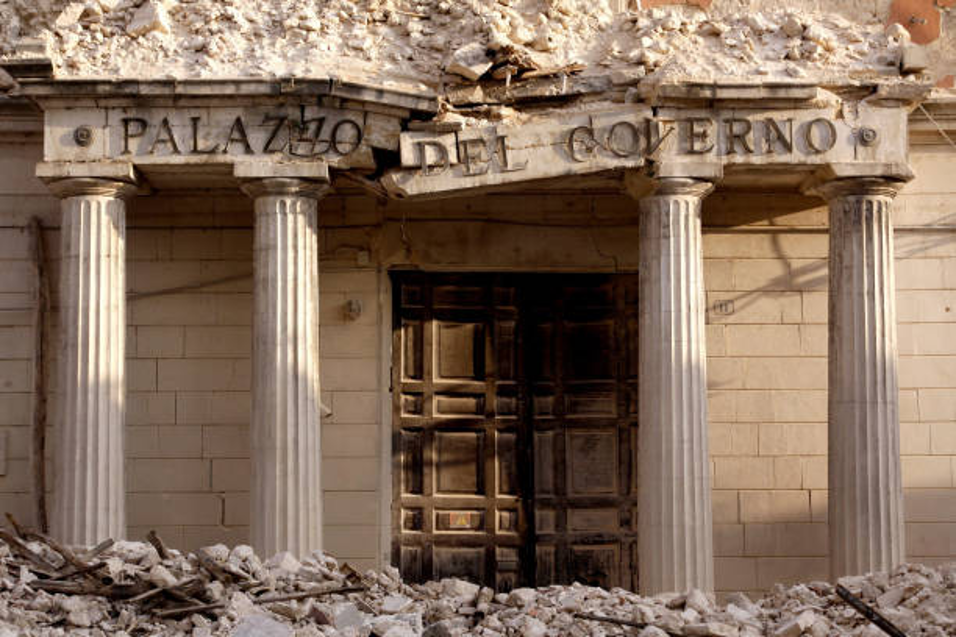
6 aprile 2009 / L’Aquila, Abruzzo, Italia / Magnitudo Richter6,3 / Vittime: 308 morti,
1.600 feriti, e circa 80.000 sfollati
April 6, 2009 / L’Aquila, Abruzzo, Italy / magnitude 6.3
Richter Scale/ Casualties: 308 dead, 1,600 injured, and
approximately 80,000 displaced |
Con il passare del tempo, il significato di tremendo si è
attenuato, e a volte ha anche un significato positivo. In
registri colloquiali di oggi, tremendo viene usato con valore
iperbolico per descrivere tutto ciò che supera la normalità,
sia in senso negativo che positivo.
Esempi: Quel bambino è tremendo. Significando che quel
bambino è terribile, cattivo; o, all’inverso, quel bambino è
spensierato, incantevole. [Forse dipende da chi parla qui:
un genitore o un testimone?] Lo scienziato Victor
Frankenstein possedeva un’abilità tremenda. [è positivo o
negativo?] E tra i giovani italiani tremendo può avere un
significato non solo positivo ma anche esagerato.
Esempio: È stato un concerto tremendo! [meraviglioso,
fantastico]
Mentre, in inglese l’aggettivo tremendous è un fortificante,
usato con valore iperbolico, che esprime grande forza,
intensità o quantità, di solito con connotazioni positive.
Esempi: Catherine was a tremendous help to me. [Caterina
mi era di grandissimo aiuto.] Luigi presented me with a
tremendous opportunity. [Luigi mi ha presentato con un’
opportunità straordinaria.] The driver was traveling a
t tremendous speed, causing a pileup on the highway. [Il
conducente procedeva a velocità elevatissima, causando un
tamponamento a catena in autostrada.
Così, se volete tradurre “tremendous” in italiano usate:
enorme—quando di parla di misura, quantità, o scala;
Esempio: Giacomo ha guadagnato una quantità enorme di
soldi con il suo brevetto. [grande] o formidabile, fantastico,
stupendo—quando si parla di qualità o successo. Esempio:
La nuova mostra al museo ha avuto un successo favoloso.
[straordinario]
≋≋≋≋≋≋≋≋≋≋≋≋≋≋≋≋≋≋≋≋≋≋≋≋≋≋≋≋≋≋
Here is another false cognate: be careful— TREMENDO does
not mean "tremendous" in English. In English, "tremendous"
is usually positive or neutral, whereas in Italian,
“tremendo” is almost always negative.
The adjective “tremendo” derives from the Latin verb
“tremere” ("to tremble"), which is linked to feelings of awe,
fear, or severe punishment; it literally meant that which
“must be feared" or "causes trembling." Originally, the word
was used in religious or solemn contexts.
Example: A “tremenda” punishment. [a divine, terrifying
punishment]
During the bombing raids on London, Margaret spent many
“tremende” nights in an air- raid shelter. [terrifying]
Unlike English, “tremendo” in Italian means frightening,
scary, or terrible. Its extended meanings include: painful,
difficult, extremely serious, disastrous, extremely negative,
unbearable, unpleasant, or very bad. (Mamma mia, that’s a
lot of negativity!) Examples: The earthquake caused a
“tremenda” tragedy. [disastrous] Losing her mother caused
her “tremendo” pain. [unbearable] In Italy, during the
summer of 2026, there was “tremendo” heat. [extremely
serious] I saw a “tremendo” show at the theater yesterday.
[terrible/awful] At the interview yesterday, Irene made a
“tremenda” blunder. [extremely embarrassing/unpleasant]
Over time, the meaning of “tremendo” has softened, and it
can sometimes even carry a positive connotation. In
colloquial Italian, “tremendo” is often used hyperbolically to
describe anything that goes beyond the norm, whether in a
negative or positive sense. Examples: That child is
“tremendo”. This could mean the child is terrible or
naughty; or, conversely, that he is carefree and charming.
[Perhaps this depends on the speaker: the parent or an
observer?] The scientist Victor Frankenstein possessed a
“tremenda” ability. [Is this positive or negative?]
Among young Italians, “tremendo” can convey a meaning
that is not only positive but also implies something
extraordinary or intense. Example: It was a “tremendo”
concert! [wonderful, fantastic]
In English, however, the adjective “tremendo” is an
intensifier—used hyperbolically to express great strength,
intensity, or quantity—usually with positive connotations.
Examples: Catherine was a tremendous help to me.
[Caterina mi era di grandissimo aiuto.] Luigi presented me
with a tremendous opportunity. [Luigi mi ha presentato con
un’opportunità straordinaria.] The driver was traveling at
tremendous speed, causing a pileup on the highway. [Il
conducente procedeva a velocità elevatissima, causando un
tamponamento a catena in autostrada.
So, if you want to translate “tremendous” into Italian, use:
“enorme”—when referring to size, quantity, or scale;
Example: Giacomo made an enorme amount of money from
his patent. [very large] or “formidabile”, “fantastico”, or
“stupendo”—when referring to quality or success.
Example: The new museum exhibition was a favoloso
success. [extraordinary]
Saturday, October 2, 2026
|
|
L’aggettivo SUPERBO deriva dal latino superbus—super/sopra.
Secondo il Corriere della Sera-Dizionario di Italiano il Sabatini
Coletti e Enciclopedia Italiana fondata da Giovanni Treccani,
significa:
1. Chi ha una stima esagerata di sé, e assume per questo
atteggiamenti di superiorità e di sprezzo nei confronti degli
altri; chi denota o rivela superbia. Per esempio: Mussolini era
un uomo superbo.
2. In senso positivo, chi prova grande soddisfazione per
qualcosa o per qualcuno. Chi si soddisfa di qualche cosa che,
direttamente o indirettamente, torna a suo merito o che
comunque la riempie di orgoglio o di soddisfazione (sempre
seguito da complemento di specificazione, nelle espressioni
essere o andare superbo di ...): Per esempio: Lorenzo è
superbo di suo figlio; Marta è superba del successo ottenuto;
Io sono superba dell’amicizia dei miei studenti.
3. Magnifico, splendido, per esempio: Penny, la Doberman
Pinscher che ha vinto il Westminster Kennel Club Dog Show
nell 2026, è un superbo esemplare di cane; Il gallo
passeggiava superbo per l’aia; Brigliadoro, il destriero di
Orlando, era un superbo cavallo: fiero, vivace, coraggioso.
4. Imponente, grandioso, per esempio: Il superbo panorama
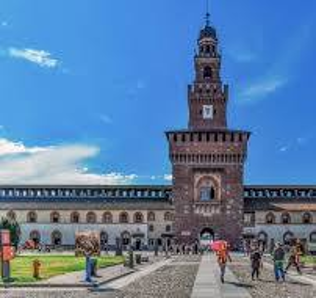
delle Alpi; Il Castello Sforzesco a Milano è un superbo palazzo.
5. Bellissimo, magnifico, splendido, stupendo (con accento
fortemente ammirativo e spesso enfatico): È uno spettacolo
veramente stupendo, te lo consiglio caldamente.; Una
stupenda pariglia di cavalli davanti alla carrozza reale.; Una
stupenda collezione di oggetti d’arte etruschi; Gelsomina
arrivò con una stupenda fuoriserie classica; anche di persona,
di animali, e di parte del corpo:
6. Sinonimi sono: fiero, orgoglioso, altero e altezzoso,
vanaglorioso, arrogante
“SUPERB” (in inglese) si traduce come eccellente, eccezionale,
magnifico.
Watch out for this false friend: “SUPERBO” does not mean
“superb” in English.
The adjective SUPERBO derives from the Latin “superbus”/
“super” (meaning "above" or "over"). According to the Corriere
della Sera Italian dictionary, the Sabatini-Coletti, and the
Enciclopedia Italiana founded by Giovanni Treccani, it means:
1. Someone who holds an exaggerated opinion of her/himself
and, as a result, adopts an attitude of superiority and disdain
toward others; something that denotes or reveals arrogance.
For example: Mussolini was an arrogant man.
2. In a positive sense, someone who feels great satisfaction
regarding something or someone. Someone who takes
satisfaction in something that—directly or indirectly—reflects
well on them or fills them with pride or satisfaction (always
followed by a prepositional phrase, in expressions such as
“essere superbo di” or “andare superbo di”...): For example:
Lorenzo is proud of his son.; Marta is proud of the success she
achieved.; I am proud of my students' friendship.
3. Magnificent, splendid—for example: Penny, the Doberman
Pinscher that won the Westminster Kennel Club Dog Show in
2026, is a superb specimen of a dog.; The rooster strutted
proudly across the farmyard.; Brigliadoro, Orlando’s steed, was
a superb horse: proud, spirited, and brave.
4. Impressive, grand—for example: The superb panorama of
the Alps; The Sforza Castle in Milan is a superb edifice.
5. Very beautiful, magnificent, splendid, stunning (conveying
strong admiration and often emphasis): It is a truly stunning
sight; I highly recommend it; a stunning pair of horses in front
of the royal carriage; a stunning collection of Etruscan art
objects; Gelsomina arrived in a stunning classic custom car;
also used for people, animals, o parts of the body.
6. Synonyms include: proud, haughty, arrogant, vainglorious.
“Superb” translates as excellent, exceptional, or magnificent.
Saturday, September 19, 2026
|
|
GRASSO/MAGRO—FAT/THIN
In classe recentemente abbiamo parlato di un personaggio in un libro che era
“sovrappeso”. Questo ci ha portato a parlare dei sinonimi e poi dei contrari.
Ecco una lista:
In class recently, we talked about a character in a book we are reading who
was “overweight.” This led us to talk about synonyms and then antonyms.
Here is a list:
SINONIMI di sovrappeso:
|
|
|
|
| barile |
barrel |
| botte |
cask/keg |
| ciccione |
chubby |
| corpulento |
corpulent |
| grassone |
fatty |
| in carne |
portly |
| lardone |
made of lard |
| obeso |
obese |
| paffuto (usato spesso per i bambini) |
chubby(often used in reference to children) |
| pancione |
paunchy/potbellied |
| robusto |
robust/solid |
| tarchiato |
burly/stocky |
| tondo |
round |
| trippone |
(scherzoso o spregiativo) big bellied (playful or derogatory) |
| |
 |
COVNTRARI di sovrappeso:
|
|
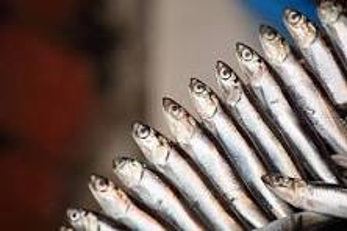
| acciuga |
anchovy |
| allampanato |
gangly/lanky |
| asciutto |
lean/skinny |
| chiodo |
nail/spike |
| esile |
thin/minute |
| gracile |
slight/scrawny/frail |
| magro |
thin/slim/slender |
| manico di scopa |
broom handle |
| mingherlino |
skinny |
| secco |
skin and bones |
| smilzo |
lean |
| snello |
thin/slim/slender |
| spillo |
pin/stiletto heel |
| stecchino |
toothpick |
| stecca |
slat/billiard cue/rod |
Saturday, September 5, 2026
|
|
RAPPORTO E RELAZIONE-definizioni  
Rapporto (entrato nella lingua nel XIV secolo):
1. Resoconto essenziale, di solito scritto, di un fatto o circostanze al quale
un individuo abbia assistito o intorno al quale abbia indagato. Per esempio:
Chiedere un rapporto esatto dell’accaduto. Può essere breve,
particolareggiato, dettagliato, chiaro, esauriente, completo.
2. Un resoconto fatto agli organi superiori da un funzionario riguardanti le
proprie funzioni e la sua competenza e responsabilità. Per esempio:
Terminati i controlli, l’ispettore inviò un rapporto circostanziato al ministero.
3. Usi e significati specifici: a. rapporto di reato, la denuncia che ogni
pubblico ufficiale o incaricato di pubblico servizio deve fare nell’esercizio
delle sue funzioni; b. nel linguaggio scolastico, fare rapporto a un alunno,
a una classe, denunciare al preside o ad altro organo competente un loro
atto di indisciplina; c. nel pubblico impiego, rapporto informativo, (fino al
1980) informazioni e giudizi sintetici fatto dai superiori ogni anno per gli
impiegati civili; d. rapporto diplomatico, fatto da un agente diplomatico al
proprio governo; e. 1. nel linguaggio militare: rapporto ordinario relazione
giornaliera fatta da ufficiali e sottufficiali al comandante del corpo o
reparto; 2. chiamare o convocare a rapporto, come ordine a una riunione
degli ufficiali; 3. mettersi a rapporto, chiedere per via gerarchica di essere
ricevuto dal comandante.
4. Relazione tra persone, gruppi, istituzioni, organizzazioni, stati ecc. Per
esempio: rapporto di lavoro, di amicizia, di parentela; avere buoni, cattivi
rapporti con qualcuno.
5. Rapporto epistolare instaurato attraverso la corrispondenza;
6. Rapporto sessuale.
7. Possibilità di confronto di paragone. Per esempio tra due registi
cinematografici. Per esempio: Esiste un rapporto tra Roberto Rossellini e
Federico Fellini?
8. Quoziente tra due numeri. Per esempio: Il rapporto tra regioni e
provincie in Italia è di 20 a 86.
Relazione (entrato nella lingua nel XIV secolo):
1. Un resoconto scritto o orale di un argomento. Per esempio: Una
relazione esauriente e ben scritta.
2. Nell’ambito parlamentare una relazione di maggioranza o di minoranza;
3. Nell’uso giuridico l’esposizione dello svolgimento del processo fatta dal
giudice o dal consigliere relatore;
4. Legame tra due o più cose. Per esempio: una relazione amichevole, un
legame sentimentale o amoroso.
5. Essere in buone o cattive relazioni con qualcuno, andare o non andare
d’accordo.
6. Relazioni pubbliche.
7. Amicizie o conoscenze, avere molte relazioni.
RAPPORTO AND RELAZIONE – Definitions
Rapporto (entered the language in the 14th century): report, comparison,
relationship, correlation.
1. An essential account, usually written, of an event or set of
circumstances that an individual has witnessed or investigated. For
example: To ask for an exact report of what happened. It can be brief,
specific, detailed, clear, exhaustive, or complete.
2. An account submitted to higher authorities by an official regarding their
duties, area of competence, and responsibilities. For example: Once the
inspections were concluded, the inspector sent a detailed report to the
ministry.
3. Specific uses and meanings: a. “rapporto di reato” (crime report): the
formal notification that any public official or person charged with a public
service must submit in the exercise of their duties; b. in a school context:
“fare rapporto” regarding a student or a class—reporting an act of
indiscipline to the principal or another competent authority; c. in the civil
service: “rapporto informativo” (informational report)—(until 1980)
summary information and assessments prepared annually by superiors
regarding civil servants; d. “rapporto diplomatico” (diplomatic report): a
report submitted by a diplomatic agent to their government; e. 1. in
military terminology: “rapporto ordinario” (routine report)—a daily account
provided by officers and non-commissioned officers to the commander of
the corps or unit; 2. “chiamare o convocare a rapporto” (to call or summon
to a report): an order to attend a meeting of officers; 3. “mettersi a
rapporto” (to request an audience): to ask, through the chain of command,
to be received by the commander.
4. Relationship between individuals, groups, institutions, organizations,
states, etc. For example: an employment, friendship, or family relationship;
having a good or bad relationship with someone.
5. Epistolary relationship established through correspondence;
6. Sexual intercourse.
7. Possibility of comparison. For example, between two film directors. Is
there a connection between Roberto Rossellini and Federico Fellini?
8. The quotient of two numbers. For example: The ratio of regions to
provinces in Italy is 20 to 86.
Relazione (entered the language in the 14th century): relationship,
connection, link
1. A written or oral account of a subject. For example: A comprehensive
and well-written report.
2. In a parliamentary context, a majority or minority report;
3. In legal usage, the presentation of the course of a trial given by the
judge or the reporting judge;
4. A connection between two or more things. For example: a friendly
relationship, a romantic or loving bond.
5. To be on good or bad terms with someone; to get along or not get along.
6. Public relations.
7. Friendships or acquaintances; having many connections.
Saturday, August 22, 2026
|
|
Se cerchiamo la traduzione di LICENSE dall’inglese all’italiano, dobbiamo essere specifici.
If we are looking for the translation of LICENSE from English to Italian, we have to be
specific.

artistic license = licenza
artistica copyright = licenza o diritti d’autore
dog license = patentino per proprietari di cani
driver’s license = patente di guida
gaming license = licenza per il gioco d’azzardo
gun license = porto d’armi
hunting license = licenza di caccia.
import license = licenza d’importazione
license plate = targa
liquor license = licenza per la vendita di bevande alcoliche
marriage license = licenza matrimoniale
motorcycle license = patente per la moto
pilot license = brevetto di pilotaggio
poetic license = licenza poetica
Ci sono anche i verbi: “autorizzare” e “dare permesso” a qualcuno
di fare qualcosa che significano “grant or give license/permission”.

Ma non dimentichiamo: AGENTE 007 LICENZA DI UCCIDERE (1962)
Il primo film di James Bond—Dr. No—ha questo titolo in Italia.
Mentre il film del 1989Licence to Kill è stato lanciato in Italia con
il titolo Agente 007 – Vendetta privata.
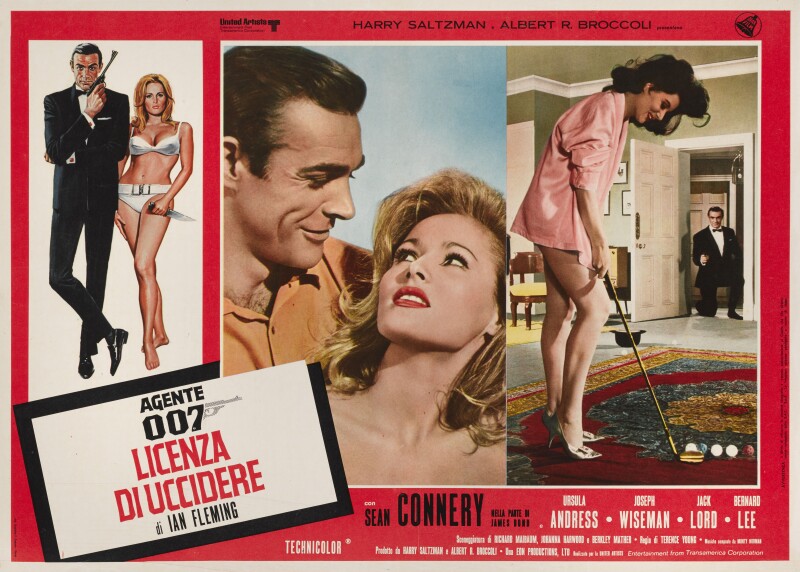
Let’s not forget James Bond’s first film, Dr. No, which was released in Italy in 1962 with
the title of AGENT 007 LICENSE TO KILL. The subsequent film from 1989 Licence to Kill
was released in Italy with the title Agente 007 – Vendetta privata (Agent 007 – Private
Vendetta).
Saturday, August 8, 2026
|
|
Ho alcune studentesse che lavorano a mano, chi con ago e filo, chi con ferri da
maglia.
Questa lista è dedicata a loro.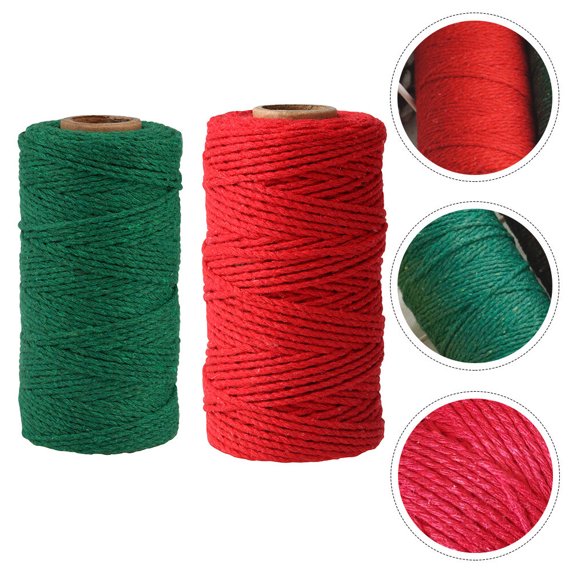
| CRAFTS |
ATTIVITÀ ARTIGIANALI |
| |
|
| Crochet |
lavorare all’uncinetto |
| Cross-stitch |
ricamare a punto croce |
| Darn |
rammendare |
| Embroidery |
ricamo/ lavoro di ricamo |
| Knit |
lavorare a maglia/lavorare ai ferri
|
| Macrame |
fare in macramè |
| Needlepoint |
ricamo con l’ago |
| Quilt |
trapuntare |
| Sew |
arecucire |
| Tat lace |
pizzo/merletto a chiacchierino |
| Weave |
tessere (la seta o un arazzo) |
| |
o intrecciare (il salice in cestini) |
I have some students who do handwork—some with needle and thread, others
with knitting needles. This list is dedicated to them.
Saturday, July 24, 2026
|
|
| |
SI DICE MI DISPIACE O MI SPIACE? 
Mi sono rivolta all’articolo di Vittorio Coletti del 3 dicembre 2015
dall’Accademia della Crusca. Per ora mi limito solo a queste due
forme dei verbi spiacere e dispiacere. Nel futuro potremo
approfondire la nostra ricerca.
<<In italiano non son poche le parole, specie verbi, in cui i prefissi
s- e dis- si fanno concorrenza negli stessi valori, sia in quello negativo,
prevalente: sviare e disviare, staccare e distaccare (che nascono da
attaccare), stendere e distendere, smettere e dismettere (con senso un
po' diverso), smembrare e dismembrare, sdegnare e disdegnare, ecc. sia in
quello intensivo, come in scacciare e discacciare. In genere la forma con
dis- è più letteraria e rara (sgombrare/disgombrare, scoprire/discoprire), e
la si trova in scrittori ad alto tasso di espressività come Dante o Montale.
Ma spiacere e dispiacere hanno avuto una storia parallela e pienamente
intercambiabile è il loro uso, almeno nei modi finiti del verbo. In quelli
infiniti (rispondo così ad altra domanda) non coincidono precisamente e
spiacente vale dispiaciuto, perché il participio passato dell'uno e quello
presente dell'altro sono poco usati (non si dice quasi mai “sono spiaciuto”
né “sono dispiacente”, ma “sono spiacente” o “sono dispiaciuto”). In
passato, in Dante e a lungo in letteratura, spiacente e dispiacente
valevano anche ‘increscioso, che dà pena, fastidiò’, non solo, come oggi,
‘che prova rammarico, rincrescimento’. Per lo stesso motivo di cui sopra, in
forma perifrastica* essere spiacente è forma corretta che equivale al
presente mi dispiace o all'analogo perifrastico sono dispiaciuto. Tra siamo
spiacenti e ci dispiace non c'è insomma differenza di senso; la prima è
solo una scelta un po' più sostenuta e formale, ma la seconda non è certo
né erronea né rozza. Mi spiace è comunque meno frequente di mi dispiace:
basta controllare su Google. Sono due sinonimi, in questo significato,
pienamente compatibili. Del resto, il passaggio dal significato di “non
piacere” a quello di “provare rammarico, fastidio” è facile e si trova già in
certi usi che Dante fa di spiacere («ché perder tempo a chi più sa più
spiace» Purg. iii 78) ed è già chiaro in quello di dispiacere («O figliuol mio,
non ti dispiaccia/ se Brunetto Latini un poco teco/ ritorna n' dietro» Inf. xv
31-33, «Non vi dispiaccia, se vi lece, dirci» Inf. xxiii, 128 e cfr. anche Pd
iv 61). >>
{Casomai vorreste rileggere La Divina Commedia nel vostro tempo libero.}
(*un modo di parlare o di scrivere indiretto o tortuoso)
SHOULD ONE SAY “MI DISPIACE” OR “MI SPIACE”, [“I’m sorry”]?
I consulted the article by Vittorio Coletti, published by the Accademia della
Crusca on December 3, 2015. For now, I am limiting myself to these two
forms of the verbs “spiacere” and “dispiacere”. We can delve more deeply
into our research in the future.
In Italian, there are quite a few words—especially verbs—where the
prefixes “s-” and “dis-” compete to convey the same meanings: both the
negative sense (which is predominant)—such as “sviare” and “disviare”,
[divert/lead astray] “staccare” and “distaccare” [detach] (derived from
“attaccare”), “stendere” and “distendere”, [spread out/elongate] “smettere”
and “dismettere” [stop/discard] (though with slightly different nuances),
“smembrare” and “dismembrare” [dismember],“sdegnare” and “disdegnare”,
[avoid/scorn] etc.—and the intensive sense, as in “scacciare” and
“discacciare” [drive away]. Generally, the form with “dis-” is more literary
and rare (e.g., “sgombrare”/”disgombrare”, [vacate] “scoprire”/”discoprire”
[discover]) and is found in highly expressive writers such as Dante or
Montale.
However, “spiacere” and “dispiacere” [I’m sorry] have shared a parallel
history, and their usage is fully interchangeable—at least regarding the
finite forms of the verb. Regarding the non-finite forms (answering another
question here), they do not precisely coincide; “spiacente” [sorry] is
equivalent to “dispiaciuto”, [sorry/regretful] as the past participle of the
former and the present participle of the latter are rarely used (one almost
never says “sono spiaciuto” or “sono dispiacente”, but rather “sono
spiacente” or “sono dispiaciuto”). In the past—in Dante’s work and
throughout a long period of literary history—”spiacente” and “dispiacente”
also carried the meaning of "distressing," "causing pain or annoyance,"
rather than just the modern sense of "feeling regret or sorrow." For the
same reason mentioned above, the periphrastic* form “essere spiacente”
is correct and equivalent to the present-tense “mi dispiace” or the
analogous periphrastic “sono dispiaciuto”. In short, there is no difference in
meaning between “siamo spiacenti” and “ci dispiace”; the former is simply
a slightly more elevated and formal choice, yet the latter is certainly
neither incorrect nor crude. “Mi spiace” is, however, less common than “mi
dispiace”—one need only check Google to see. In this sense, they are two
fully compatible synonyms. Moreover, the shift from the meaning of "to be
displeasing" to that of "feeling regret or annoyance" is a natural one; it
appears in certain usages of “spiacere” by Dante (“ché perder tempo a chi
più sa più spiace” — "for wasting time is all the more displeasing to those
who know the most," “Purgatorio” III, 78) and is already evident in his use
of “dispiacere” (“O figliuol mio, non ti dispiaccia / se Brunetto Latini un
poco teco / ritorna n' dietro” — "O my son, let it not displease you / if
Brunetto Latini walks back a little way with you," “Inferno” XV, 31–33;
“Non vi dispiaccia, se vi lece, dirci” — "Let it not displease you, if you are
permitted, to tell us," “Inferno” XXIII, 128; see also “Paradiso” IV, 61).
{Just in case you would like to reread The Divine Comedy in your spare
time.}
(*an indirect or roundabout way of speaking or writing)
Saturday, July 11, 2026
|
|
Questa è la continuazione dell’articolo che ho trovato sul sito di Zanichelli,
da Intercultura Blog della Prof. Anna:
“CIAO” DAL CINEMA AI GIORNALI
Nel film di Monicelli I soliti ignoti, del 1958, Gassman saluta l’amico
Capannelle ricoverato in ospedale con le parole «Addio, ciao, bello».
Insomma, il nostro ciao si diffonde nel mondo sulle ali del boom
economico come «icona quasi fonosimbolica» e del diffondersi del
«tu» nei rapporti personali. Tant’è che nel 1967, l’anno tragico per
Sanremo in cui Tenco presenta Ciao amore ciao, la Piaggio decide di
battezzare «Ciao» un suo motorino che con lo slogan pubblicitario «Bella
chi ciao» punta sul pubblico giovanile. E ai lettori giovani, l’anno dopo, si
rivolge anche il settimanale illustrato «Ciao 2001», mentre a grandi e
bambini viene proposta la crema al cioccolato «Ciaocrem».
“CIAO” NELLE CANZONI
Il ’68 è l’anno in cui sempre a Sanremo Luis Armstrong duetta con Lara
Saint Paul cantando Ciao, stasera son qui. L’irresistibile ascesa di ciao
giunge all’apoteosi nel 1990 con la mascotte eponima dei Mondiali di
calcio. E attualmente, dopo pizza, ciao è la parola italiana più pronunciata
nel mondo fino a ciao raga, ciao neh, ciaone. «Questa mattina mi son
svegliato, oh bella ciao, bella ciao, bella ciao ciao ciao»: va detto che il
canto intonato dai partigiani, che si sarebbe imposto molto dopo come
inno politico di resistenza e di liberazione, fu lanciato grazie anche a
iniziative commerciali prestigiose come il disco di canti popolari italiani
interpretati da Yves Montand. Il più celebre etnomusicologo, Roberto Leydi,
dimostrò che Bella ciao è radicata nella tradizione popolare perché risale a
un canto piemontese dell’Ottocento dove però manca la parola ciao, che
invece compare in un canto delle mondine anni Quaranta.
Tratto dalle seguenti fonti: https://www.corriere.it/cronache/18_giugno_24/ciao-compie-solo-200-anni-
parola-italiana-piu-celebre-pizza-ecd8e05a-7720-11e8-b055-7e55445aba73.shtml;
https://int-aulalingue.scuola.zanichelli.it/benvenuti/2018/09/20/la-parola-ciao-compie-200-anni-storia-del-
saluto-piu-conosciuto-del-mon
CIAO--PART II
This is the continuation of the article I found on the Zanichelli website,
from Professor Anna's Intercultura Blog:
"CIAO" FROM CINEMA TO NEWSPAPERS
In Mario Monicelli's (1915-2010)1958 film I soliti ignoti (Big Deal on
Madonna Street), Vittorio Gassman bids farewell to his hospitalized friend
Capannelle with the words, "Farewell, ciao, bello." In short, our "ciao"
spread throughout the world on the wings of the economic boom as an
"almost phonologically symbolic icon" and the spread of the "tu" in
personal relationships. So much so that in 1967, the tragic year for
Sanremo in which Tenco presented "Ciao amore ciao," Piaggio decided to
name one of its scooters "Ciao," which, with the advertising slogan "Bella
chi ciao," targeted a younger audience. And the following year, the
illustrated weekly "Ciao 2001" also addressed young readers, while
"Ciaocrem" chocolate spread was offered to adults and children alike.
"CIAO" IN SONGS
In 1968, again at Sanremo, Luis Armstrong duetted with Lara Saint Paul,
singing "Ciao, stasera son qui." (Ciao, this evening I’m here) The
irresistible rise of "Ciao" reached its apotheosis in 1990 with the
eponymous mascot of the World Cup. And currently, after "pizza," "ciao" is
the most uttered Italian word in the world, up to "ciao raga," (Ciao
guy/gal) "ciao neh," (ciao, so) "ciaone." (big ciao) "This morning I woke up,
oh (my) beautiful (one) ciao, bella ciao, bella ciao, ciao, ciao": it must be
said that the song sung by the partisans, which would much later become
established as a political anthem of resistance and liberation, was
launched thanks in part to prestigious commercial initiatives such as the
album of Italian folk songs performed by Yves Montand. The most famous
ethnomusicologist, Roberto Leydi, demonstrated that Bella ciao is rooted
in popular tradition because it dates back to a nineteenth-century
Piedmontese song where, however, the word ciao is missing, however it
appears in a song by rice weeders/pickers from the 1940s.
Taken from the following sources: https://www.corriere.it/cronache/18_giugno_24/ciao-compie-solo-200-
anni-parola-italiana-piu-celebre-pizza-ecd8e05a-7720-11e8-b055-7e55445aba73.shtml; https://it.wikipedia.
org/wiki/Ciao
https://int-aulalingue.scuola.zanichelli.it/benvenuti/2018/09/20/la-parola-ciao-compie-200-anni-storia-del-
saluto-piu-conosciuto-del-mondo/
Saturday, June 27, 2026
|
|
 
Guardate che bell’articolo che ho trovato sul sito di Zanichelli, da Intercultura
Blog della Prof. Anna:
LE ORIGINI
Nel 2018 ciao ha compiuto 200 anni. É la parola italiana più celebre dopo pizza.
Qual è la sua origine? Sembra che ciao derivi dal latino sclavum (schiavo),
variante di slavum quando a essere ridotte in schiavitù erano le genti di
provenienza slava. A partire dal Quattrocento si introduce l’abitudine di salutare
qualcuno dichiarandosi suo schiavo, mettendosi simbolicamente a disposizione
dell’altro come uno schiavo si esprimeva profondo rispetto, da qui la parola ciao
che origina dal termine veneziano s’ciavo con cui si intendeva dire appunto
“sono schiavo vostro”. È a partire dall’Ottocento però che si diffuse come saluto
informale dapprima in Lombardia, dove il termine s’ciavo venne alterato
assumendo la forma ciao ed è proprio questa variante che si propagherà in tutta
la Penisola.
LA DIFFUSIONE IN ITALIA
Ma perché ciao compie 200 anni? Perché risale a due secoli fa la sua prima
attestazione scritta. Infatti nel 1818 Francesco Benedetti, tragediografo di
Cortona, in una lettera parla del modo gentile in cui viene trattato dai milanesi e
da una signora con cui si reca alla Scala: «Questi buoni Milanesi cominciano a
dirmi: Ciau Benedettin». Sempre di quello stesso anno è un’epistola di Giovanna
Maffei, contessa veronese, che porge a suo marito i saluti del figlio ancora
piccolo: «Peppi à appreso a dire il tuo nome, e mi disse di dir ciao a Moti».
L’anno successivo, nel 1819, Lady Sidney Morgan, scrittrice inglese, descrive il
modo in cui alcuni spettatori presenti presso la Scala si salutano con un «cordial
ciavo».
LA DIFFUSIONE ALL’ESTERO
Nel 1959 Domenico Modugno vinse a Sanremo con Johnny Dorelli cantando
Piove. In realtà quella canzone resterà nella memoria per il ritornello: «Ciao ciao
bambina», che presto si diffonderà all’estero nella trascrizione inglese «Chiow
Chiow Bambeena», in quella tedesca «Tschau Tschau Bambina», in quella
spagnola «Chao chao bambina». Dalida la cantò nella versione francese. Il
linguista Nicola De Blasi (nel libro «Ciao», pubblicato dal Mulino) sostiene che la
canzone di Modugno e di Dino Verde rappresentò la svolta decisiva nella fortuna
internazionale della parola ciao, la forma di saluto più familiare che si conosca
non solo in Italia. In realtà, segnala De Blasi, il termine era già noto oltre i
confini nazionali: in un romanzo francese di Paul Bourget del 1893, un
personaggio diceva in italiano «Ciaò, simpaticone» e nei primi del Novecento
veniva suonato un valzer intitolato «Ciao». Il saluto filtrò ben presto nei film
neorealisti e nelle commedie all’italiana nel momento in cui il nostro cinema
aveva un successo mondiale.
La parola si è diffusa per il mondo a seguito delle migrazioni degli italiani, ed è
entrata come saluto informale anche nel lessico di numerose altre lingue, quasi
sempre unicamente per il commiato.
Tratto dalle seguenti fonti: https://www.corriere.it/cronache/18_giugno_24/
ciao-compie-solo-200-anni-parola-italiana-piu-celebre-pizza-ecd8e05a-7720-
11e8-b055-7e55445aba73.shtml; https://it.wikipedia.org/wiki/Ciao
https://int-aulalingue.scuola.zanichelli.it/benvenuti/2018/09/20/la-parola-ciao-
compie-200-anni-storia-del-saluto-piu-conosciuto-del-mondo

Look at this great article I found on the Zanichelli website, from Professor
Anna's Intercultura Blog:
THE ORIGINS
In 2018, "ciao" celebrated its 200th anniversary. It's the most famous Italian
word after "pizza."
What is its origin? It seems that "ciao" derives from the Latin "sclavum" (slave),
a variant of "slavum," when people of Slavic origin were enslaved. Beginning in
the 15th century, the custom of greeting someone by declaring oneself their
slave began, symbolically placing oneself at the other's disposal as a slave,
expressing profound respect. Hence the word "ciao," which originates from the
Venetian term "s'ciavo," meaning "I am your slave." However, it began to spread
as an informal greeting in the 19th century, first in Lombardy, where the term
"s'ciavo" was altered to "ciao," and it is precisely this variant that spread
throughout the Italian peninsula.
THE SPREAD IN ITALY
But why is "ciao" celebrating its 200th anniversary? Because its first written
mention dates back two centuries. In 1818, Francesco Benedetti, a dramatist
from Cortona, wrote in a letter about the kind way he was treated by the
Milanese and by a lady with whom he attended La Scala: "These good Milanese
are beginning to say to me: 'Ciao Benedettin'." From that same year there is a
letter from Giovanna Maffei, a countess from Verona, who offers her husband
greetings from their still young son: "Peppi has learned to say your name, and
he told me to say ciao to Moti." The following year, in 1819, Lady Sidney Morgan,
an English writer, described the way some spectators at La Scala greeted each
other with a "cordial ciavo."
THE SPREAD ABROAD
In 1959, Domenico Modugno won the Sanremo Music Festival with Johnny Dorelli,
singing "Piove. " In reality, that song will remain in people's memory for its
refrain: "Ciao ciao bambina," which would soon spread abroad in the English
transcription "Chiow Chiow Bambeena," in the German "Tschau Tschau Bambina,"
and in the Spanish "Chao chao bambina." Dalida sang it in the French version.
Linguist Nicola De Blasi (in his book "Ciao," published by Mulino) argues that
Modugno and Dino Verde's song represented a turning point in the international
popularity of the word "ciao," the most familiar greeting known not only in Italy.
In fact, De Blasi points out, the term was already known beyond national
borders: in a French novel by Paul Bourget from 1893, a character said in Italian
"Ciaò, simpaticone," and in the early twentieth century, a waltz entitled "Ciao"
was performed. The greeting quickly filtered into neorealist films and Italian-
style comedies at a time when Italian cinema was enjoying worldwide success.
The word spread throughout the world following the migration of Italians, and it
also entered the lexicon of many other languages as an informal greeting,
almost always solely as a farewell.
Taken from the following sources: https://www.corriere.it/cronache/18_giugno_
24/ciao-compie-solo-200-anni-parola-italiana-piu-celebre-pizza-ecd8e05a-7720-
11e8-b055-7e55445aba73.shtml; https://it.wikipedia.org/wiki/Ciao
https://int-aulalingue.scuola.zanichelli.it/benvenuti/2018/09/20/la-parola-ciao-
compie-200-anni-storia-del-saluto-piu-conosciuto-del-mondo/
Saturday, June 13, 2026
|
|
|
| |
Attenti, ecco un altro falso amico. “RUMOR” in inglese non è equivalente a “RUMORE” in italiano.
RUMOR (in inglese) è un’informazione non verificata: un pettegolezzo, una voce, una chiacchiera,
una diceria; e a volte anche un’indiscrezione.
Per esempio:
Il pettegolezzo di oggi è che il senatore abbia commesso una frode bancaria.
Gira/corre voce che Mario stia nei guai.
Sono solo chiacchiere, non darci retta.
Non credere alle dicerie messe in giro sul tuo conto.
I fatti si sono rivelati per un’indiscrezione giornalistica.
E ci sono le forme composte in inglese: “rumormonger” e “gossipmonger” che è un pettegolo/una
pettegola, o una malalingua.
RUMORE è un suono forte che si traduce in inglese: noise, racket, a loud sound, a din.
E anche qui ci sono le forme composte: fare rumore (make noise), inquinamento da rumore
(noise pollution), mappatura del rumore (noise mapping), rumore di fondo (background noise),
e rumore sordo (thud).
RUMOR (ENGLISH) ≠ RUMORE (ITALIANO) |
Be careful—here is another false friend. "RUMOR" in English is not equivalent to "RUMORE" in
Italian. A RUMOR (in English) is unverified information: gossip, a whisper, idle talk, or a report
—and sometimes even a leak.
For example:
The rumor today is that the senator committed bank fraud.
There is a rumor going around that Mario is in trouble.
It’s just idle talk; don’t pay any attention to it.
Don’t believe the rumors being spread around about you.
The facts came to light through a press leak.
And there are compound forms in English: "rumormonger" and "gossipmonger"—terms for a
gossip or a malicious tongue.
RUMORE (in Italian) is a loud sound, which translates into English as: noise, racket, a loud
sound, or a din.
And here, too, there are compound forms: fare rumore (to make noise), inquinamento da
rumore noise pollution), mappatura del rumore (noise mapping), rumore di fondo
(background noise), and rumore sordo (a thud).
Saturday, May 30, 2026
|
|
| |
.jpg)
ANDARE A ZONZO, che espressione divertente.
Per una spiegazione precisa, mi riferisco a due fonti:
1. Il vocabolario Etimologico della Lingua Italiana di Francesco Bonomi (uno dei miei libri
piùpregiati—nonostante l’internet—che ho comprato anni fa a Roma, a una di quelle bancarelle
dell’usato vicino alla Stazione Termini).
“Probabilmente è voce onomatopeica alla pari di Ronzare, che è il rumore che fanno le zanzare, le
api e simili insetti nel volare. Si usa nella frase <<Andare a zono>> = andare attorno e non saper
dove// tolta la metafora da pecchie, calabroni e simili che vanno qua e là ronzando, che pur dicesi
Zonzare<<andare ad alcuno il cervello a zonzo>> = impazzire.”
E, la seconda fonte:
2. Istituto della Enciclopedia Italiana fondata da Giovanni Treccani:
żónżo sostantivo maschile [voce onomatopeica, riferita dapprima al volo di alcuni insetti]. – Si
usa solo nella frase familiare andare a zonzo, andare, passeggiare girellando qua e là, senza meta
definita o scopo preciso, per svago o per trascorrere il tempo in qualche modo: aspetto che … sia
pronta, per uscire e cominciare il giro della città, per andarcene a zonzo come infinitamente mi
piace (Achille Campanile). Nell’uso antico, scherzo del cervello, andare a zonzo, impazzire;
mandare a uno il cervello a zonzo, farlo
impazzire.
E, la seconda fonte:
2. Istituto della Enciclopedia Italiana fondata da Giovanni Treccani:
żónżo sostantivo maschile [voce onomatopeica, riferita dapprima al volo di alcuni insetti]. – Si
usa solo nella frase familiare andare a zonzo, andare, passeggiare girellando qua e là, senza meta
definita o
scopo preciso, per svago o per trascorrere il tempo in qualche modo: aspetto che … sia
pronta, per uscire e
cominciare il giro della città, per andarcene a zonzo come infinitamente mi
piace (Achille Campanile).
Nell’uso antico, scherzo del cervello, andare a zonzo, impazzire;
mandare a uno il cervelloa zonzo, farlo
impazzire.
E così anche noi siamo andati a zonzo, per modo di dire, facendo una passeggiata piacevole,
senza fretta attraverso il vocabolario italiano.
ANDARE A ZONZO (WALKING AROUND), what an amusing and funny expression.
For a precise explanation, I'll refer to two sources:
1.The Etymological Dictionary of the Italian Languageby Francesco Bonomi (one of my most
prized books—despite the internet—which I bought years ago in Rome, from one of those second-
hand booksellers near Termini Station).
"It is probably an onomatopoeic word, like buzzing, which is the noise mosquitoes, bees, and similar
insects make when flying. It's used in the phrase "Andare a zono" = to wander around and not know
where // taking away the metaphor of bees, hornets, and the like that go here and there buzzing,
which is also called Zonzare = to wander someone's brains around = to go crazy."
And, the second source:
2. Institute of the Italian Encyclopedia founded by Giovanni Treccani:
żónżo masculine noun [onomatopoeic word, originally referring to the flight of certain insects]. It is
used only in the familiar phrase andare a zonzo (to wander), to go, to stroll, wandering here and
there, without a defined destination or precise purpose, for leisure or to pass the time in some way:
I'm waiting for ... to be ready, to go out and begin my tour of the city, to wander around as I infinitely
enjoy doing (AchilleCampanile). In ancient usage, a trick of the brain, to wander, to go mad; to send
someone's mind wandering, to drive them mad.
And so we too went a zonzo, so to speak, taking a pleasant, unhurried stroll through Italian vocabulary.
Saturday, May 17, 2026
|
|

Qual è la differenza tra BUFERA e TEMPESTA? La loro traduzione in inglese è identica:
“storm, squall, blizzard”.
Secondo Il Dizionario Internazionale Il Nuovo De Mauro, La BUFERA è un vento a raffiche
molto forte, accompagnato da neve, pioggia, o grandine. Per esempio: “La meteorologa
aveva previsto brutto tempo, e infatti è arrivata una bufera”.
In senso figurativo significa sconvolgimento o furia, per esempio: “La bufera della guerra.”
o per descrivere una situazione di tensione o contrasto, per esempio: “Quando Rinaldo è
tornato a casa dopo la mezzanotte, per l’ennesima volta, è scoppiata la bufera.”
Questa parola è entrata nel lessico italiano nel XIV secolo.
Una TEMPESTA è:
1. Una violenta perturbazione atmosferica che si manifesta con forti venti e precipitazioni,
per esempio: il cielo minaccia tempesta.
2. Un’agitazione violenta della superficie del mare o di un lago provocata dalla furia del
vento, per esempio: il mare è in tempesta, la barca è stata travolta dalla tempesta.
3. In senso figurativo: una sfuriata, per esempio: una tempesta di calci. Anche una serie
concitata di urla, insulti e simili: una tempesta di improperi, di rimproveri.
Questa parola è entrata nel lessico italiano nel secolo XIII; deriva dal latino tempĕsta (m),
variante di tempestas, -atis “tempo atmosferico”, derivazione di tempus “tempo”.
Ci sono anche le seguenti unità polirematiche. Ma prima di elencarle, cosa significa “unità
polirematiche”? È una sequenza non modificabile di parole che costituisce un’unità di
significato, per esempio: alta moda, anno luce, e ciò che segue:
1. Tempesta di ghiaccio: fenomeno per cui l’acqua piovana, cadendo a temperatura sotto
zero, ma essendo ancora liquida, si congela rapidamente a contatto con altri corpi.
2. Tempesta di sabbia: provocata da vento turbinoso che, in zone aride o desertiche,
solleva la sabbia a grandi altezze.
3. Tempesta di vento: perturbazione atmosferica caratterizzata da violente raffiche di
vento.
4. Tempesta in un bicchiere d’acqua: grande confusione per cose di poco conto.
5. Tempesta magnetica: perturbazione improvvisa delle condizioni elettriche dell’atmosfera.
6. Uccello delle tempeste: (a) nome comunemente dato ad alcuni uccelli della famiglia dei
Procellaridi e specialmente a quelli appartenenti alla sottofamiglia degli Idrobatini; o
(b) piccolo uccello nero (Hydrobates pelagicus) che vive al largo delle coste del
Mediterraneo e dell’Atlantico nordorientale.
What's the difference between BUFERA and TEMPESTA? Their English translation is
identical: “storm, squall, blizzard”.
According to the International Dictionary Il Nuovo De Mauro, BUFERA is a very strong
gusty wind, accompanied by snow, rain, or hail. For example: “The weather forecaster had
predicted bad weather, and indeed a storm arrived.”
In a figurative sense, it means upheaval or fury, for example: "The storm of war" or to
describe a situation of tension or conflict, for example: "When Rinaldo returned home after
midnight, for the umpteenth time, a storm erupted."
This word entered the Italian lexicon in the 14th century.
A TEMPESTA is:
1. A violent atmospheric disturbance manifested by strong winds and rainfall, for example:
the sky threatens a storm.
2. A violent agitation of the surface of the sea or a lake caused by the fury of the wind,
for example: There is a storm at sea, the boat was destroyed by the storm.
3. In a figurative sense: an outburst, for example: a storm of kicks. Also, a heated series
of shouts, insults, etc.: a storm of insults, reproaches.
This word entered the Italian lexicon in the 13th century; it derives from the Latin
tempĕsta (m), a variant of tempestas, -atis “weather,” derived from tempus “time.”
There are also the following polyrematic units. But before listing them, what does
"polyrematic units" mean? More commonly known in English as multi-word expressions
(MWE), are an unchangeable sequence of words that constitutes a unit of meaning, for
example: high fashion, light year, and, in our case, the following:
1. Ice storm: phenomenon in which rainwater, falling at subzero temperatures but still
liquid, rapidly freezes upon contact with other bodies.
2. Sandstorm: caused by a turbulent wind that, in arid or desert areas, lifts sand to great
heights.
3. Windstorm: atmospheric disturbance characterized by violent gusts of wind.
4. Storm in a teacup: great confusion over trivial matters.
5. Magnetic storm: sudden disturbance of the electrical conditions of the atmosphere.
6. Storm petrel: (a) A common name for some birds of the Procellaridae family, especially
those of the Hydrobatines subfamily; or (b) A small black bird (Hydrobates pelagicus)
found off the coasts of the Mediterranean and the northeastern Atlantic.
Saturday, May 2, 2026
|
|
| |

Come si misura un pezzo di terra in acri o ettari? Come al solito, la risposta è: “DIPENDE”!
Dove siete? In Italia? Negli Stati Uniti? Altrove? Ciò nonostante, siate pronti a tirare fuori
la vostra calcolatrice!
L'acro, simbolo ac, è un'unità di misura di superficie del Sistema Imperiale Britannico e
di quello abitudinario statunitense, ma non è stato adottato dal Sistema Internazionale.
[Il Sistema Internazionale, così chiamato dal 1961, ha le sue origini in un trattato
internazionale del 20 maggio 1875, la Convenzione del Metro, firmato a Parigi e
sottoscritto da 17 nazioni* che ha stabilito le linee da seguire per la determinazione di
unità di misura valide internazionalmente.]
Il sistema di misurazione delle aree agricole ha origini latine (ne parlano Livio in Ab Urbe
Condita 27 a.C.-14 d.C., Strabone in Geografia 7 a.C., Plinio il Vecchio in Naturalis Historia
77-78 d.C., e Plinio il Giovane in Epistulae 96-109 d.C.).
Questa unità di misura anglosassone—detta anche “statute o imperial acre” fu stabilita nel
1878 come equivalente a 4840 iarde quadrate; 1 acro = 4046,87 m2=0,404687 ha (ettari)
e veniva utilizzata fino ai primi del novecento anche in Italia, dove è rimasta nel regime
della misurazione delle coltivazioni agricole. È definita come l'area-tipo di un rettangolo di
660 piedi di lunghezza (furlong) per 66 di larghezza (catena), ovvero 43560 piedi quadrati
che, nel Sistema Internazionale, corrispondono a circa 4.047 m² (o per i lettori
statunitensi, circa 75% di un campo da football statunitense).
Oggi in Italia esiste anche un'unità di misura chiamata "acro" o "campo", non correlata a
quella sopra citata e sottomultipla dell'ettaro, e tuttavia abbastanza simile nelle
dimensioni: corrisponde a 4000 m² e quindi 2,5 di tali acri corrispondono a un ettaro, o
10000 m².
L'ettaro, simbolo ha, è una unità di misura di superficie agraria di largo uso che
è riconosciuto dal Sistema Internazionale di unità di misura. È pari a 10000 m², cioè
all'area di un quadrato con lato lungo 100 metri (1 hm/ettometro). Viene ufficialmente
utilizzato dall'Agenzia delle Entrate italiana per misurare la superficie dei terreni a fini
catastali o fiscali.
Se decidete di comprare un pezzettino di terra in Italia, vi consiglio di assumere un
geometra.
How do you measure a piece of land? As usual, the answer is: “IT DEPENDS”!
Where are you? In Italy? In the United States? Elsewhere? Regardless, be ready to pull
out your calculator ��
The acre (symbol: ac) is a unit of surface area measurement within the British Imperial
and U.S. customary systems, but it has not been adopted by the International System.
[The International System—so named since 1961—has its origins in an international treaty
dated May 20, 1875: known as Convention of the Metre. Signed in Paris and ratifie
Convention of the Metre. Signed in Paris and ratified by 17 nations**, this treaty
established the guidelines to be followed for determining internationally valid units of
measurement.]
The system for measuring agricultural land has Latin origins (it is discussed by Livy in Ab
Urbe Condita [27 BC–AD 14], Strabo in Geografia [7 BC], Pliny the Elder in Naturalis
Historia [AD 77–78], and Pliny the Younger in Epistulae [AD 96–109]).
This Anglo-Saxon unit of measurement—also known as the "statute" or "imperial
acre"—was established in 1878 as being equivalent to 4,840 square yards; 1 acre =
4,046.87 m² = 0.404687 ha (hectares) and was also used in Italy until the early 20th
century, where it remains in use today within the context of agricultural land
measurement. It is defined as the standard area of a rectangle 660 feet in length (one
furlong) by 66 feet in width (one chain)—that is, 43,560 square feet—which, under the
International System of Units, corresponds to approximately 4,047 m² (or, for U.S.
readers, about 75% of a football field).
Today in Italy, there exists a unit of measurement called the "acro" or "campo." While
unrelated to the unit mentioned above—and serving as a sub-multiple of the hectare—it
is nonetheless quite similar in size: it corresponds to 4,000 m², meaning that 2.5 such
"acres" are equivalent to one hectare, or 10,000 m².
The hectare (symbol: ha) is a widely used unit of measurement for land area that is
recognized by the International System of Units. It is equivalent to 10,000 m²—that is,
the area of a square with sides of 100 meters in length (1 hm/hectometer). It is officially
used by the Italian Revenue Agency (the equivalent of the IRS) to measure land area for
cadastral or tax purposes.
If you decide to purchase a small plot of land in Italy, I recommend hiring a surveyor.
*Francia: (paese ospitante), Germania, Austria-Ungheria, Belgio, Brasile, Argentina,
Danimarca, Spagna, Stati Uniti d'America, Italia, Perù, Portogallo, Russia, Svezia e
Norvegia, Svizzera, Impero Ottomano, e Venezuela. **France: (host country), Germany,
Austria-Hungary, Belgium, Brazil, Argentina, Denmark, Spain, United States of America
Italy, Peru, Portugal, Russia, Sweden and Norway, Switzerland, Ottoman Empire, and
Venezuela.
Saturday, April 18, 2026
|
|
| |
|
Cosa si mangia in Italia per pasqua?
Tra il menu tradizionale troviamo: pasta fatta in casa, ortaggi e verdure di stagione, torte salate,
e agnello.
In tutta Italia, il piatto forte del pranzo pasquale è l’agnello, preparato in modi
diversi a seconda della regione:
1. al forno con le patate in Piemonte, Friuli-Venezia Giulia, Veneto e Campania,
2. con rosmarino e cipolle in Sicilia,
3. “tartufato” in Umbria,
4. arrosto in Liguria ed Emilia-Romagna,
5. “cacio e uova” in Molise e Abruzzo,
6. con i ‘cardoncelli’ – una verdura selvatica dalla forma sottile e allungata, che cresce
spontaneamente in primavera, e un tipo di fungo – in Basilicata,
7. senza dimenticare il polpettone alla sarda, e
8. l’abbacchio alla romana, cotto con vino, acciughe salate, rosmarino e aglio.
What do people eat for Easter in Italy?
The traditional menu typically features homemade pasta, seasonal vegetables, savory
pies, and lamb.
Throughout Italy, the centerpiece of the Easter dinner is lamb, prepared in various ways
depending on the region:
1. baked with potatoes in Piedmont, Friuli-Venezia Giulia, Veneto, and
Campania;
2. with rosemary and onions in Sicily;
3. "tartufato" (with truffles) in Umbria;
4. roasted in Liguria and Emilia-Romagna;
5. "cacio e uova" (with cheese and eggs) in Molise and
Abruzzo;
6. with “cardoncelli”—a wild vegetable with a slender, elongated shape that grows
naturally in the spring, also a type of orchid mushroom—in Basilicata;
7. not to mention “polpettone alla sarda” (Sardinian-style meatloaf); and
8. “abbacchio alla romana” (Roman-style lamb), cooked with wine, salted anchovies,
rosemary, and garlic.
HAPPY EASTER TO ALL OF YOU
[Queste informazioni provengono dal sito/this information comes from:
https://www.mangiarebuono.it/pasqua-i-10-piatti-della-tradizione-italiana]
Saturday, April 4, 2026
|
|

Attenti, ecco un altro falso amico:
HOSTESS in italiano NON significa ‘padrone di casa’.
Ieri ho ospitato degli amici a casa mia e mi hanno detto, <<Karen sei una brava hostess.>> Li ho
ringraziati del complimento, ma ho dovuto spiegare che “hostess” in italiano è un’assistente di volo
o una donna addetta al ricevimento o all’accompagnamento di congressisti o turisti. La parola che
cercavano è “padrona di casa” o “anfitrione”. Un “oste” è un locandiere, un proprietario o un
conduttore di un’osteria o di una locanda.
Anfitrione, che strana parola! Di nuovo cito l’Enciclopedia Treccani:
Anfitrïóne singolare, maschile [dal latino Amphitryon o Amphitruo -onis, greco ᾿Αμϕιτρύων]. –
Il padrone di casa, generoso e ospitale, nei riguardi degli invitati a un pranzo, a un banchetto in
casa sua: brindiamo all’anfitrione; al nostro anfitrione! sei un vero anfitrione.
La parola deriva, per antonomasia, dal nome di un eroe della mitologia greca e personaggio di una
commedia di Plauto, marito di Alcmena, con la quale Giove, invaghitosi di lei, si unisce sotto le
sembianze del marito assente; più direttamente, da una battuta pronunciata da Sosia, servo di
Anfitrione, nel rifacimento che della commedia plautina fece Molière nell’Amphitryon (1668), dove,
nella confusione tra il vero e il falso Anfitrione, egli sentenzia che il vero è quello «presso cui si
cena».
© Istituto della Enciclopedia Italiana fondata da Giovanni Treccani
Be careful, here is another false cognate.
HOSTESS in Italian does NOT mean the same thing as in English.
Yesterday, I hosted some friends at my home, and they told me, "Karen, you’re a great ‘hostess’."
I thanked them for the compliment, but I had to explain that, in Italian, a "hostess" is a flight
attendant or a woman employed to welcome or accompany conference attendees or tourists. The
word they were looking for was “padrona di casa” (hostess/lady of the house) or “anfitrione”
(host). An “oste” is an innkeeper—the owner or manager of an “osteria” (tavern) or “locanda”
(inn).
Anfitrione—what a strange word! Once again, I quote the Treccani Encyclopedia:
Anfitrïóne (singular, masculine noun—please note that the accents inside the word are ONLY
there to help you with pronunciation) [from the Latin Amphitryon or Amphitruo -onis; from the
Greek ᾿Αμϕιτρύων]. – The master of the house—generous and hospitable—in relation to guest
s invited to a lunch or banquet in his home: let’s toast to the host, to our host! you are a true
host.
The word derives—by antonomasia—from the name of a hero in Greek mythology and a character
in a comedy by Plautus: the husband of Alcmena, with whom Jupiter—having become enamored of
her—joins with her while disguised as her absent husband. More directly, however, it stems from a
line spoken by Sosia—Amphitryon’s servant—in Molière’s 1668 adaptation of Plautus’s comedy,
Amphitryon. In that play, amidst the confusion between the true Amphitryon and the imposter,
Sosia famously declares that the “real” one is the one "at whose table one dines."
© Institute of the Italian Encyclopedia, founded by Giovanni
Saturday, March 21, 2026
|
|
Tamponare e tamponarsi. Vi prometto che questa è l’ultima puntata su questo verbo.
Come vuole L’Accademia della Crusca, la spiegazione è precisa, così, se volete arrivare al dunque
potetescorrere l’articolo e leggere la conclusione.
‘Note su tamponare e tamponarsi’ “alla redazione {dell’Accademia della Crusca} sono giunte
numerose richieste riguardo al nuovo significato assunto dal verbo tamponare (anche riflessivo,
tamponarsi) in relazione alla pandemia da COVID-19. Cerchiamo di fare chiarezza.”
Come abbiamo già visto, “l’accezione di tamponare, con valore transitivo, sia entrata a tutti gli
effetti nellalingua italiana.”
“Tuttavia, l’acclimatazione del verbo nella lingua, con il conseguente uso presso tutte le fasce
della popolazione, i rivolgimenti sociali e le nuove tecniche medico-diagnostiche dovute
soprattutto alla persistenza del virus, hanno portato a ulteriori sviluppi. Si è generato, infatti, un
uso pronominale di tamponare (all’infinito tamponarsi), non ancora registrato dalla lessicografia,
con il significato di ‘sottoporsi al tampone’, per es. Luca è risultato positivo: domani per sicurezza
mi tampono anch’io. Si tratta di un verbo (mi tampono = tampono me stesso) che non ammette
un altro complemento oggetto (a differenza di tamponarsi con il significato di ‘cercare di bloccare
una fuoriuscita di sangue’, es. mi tampono la ferita con una garza). Tuttavia, se ragioniamo per
ruoli semantici, cioè per relazioni tra argomento e verbo, l’agente (chi compie l’azione espressa
dal verbo) e il paziente (chi la subisce) sono solo apparentemente co-referenziali. Infatti, l’azione
del tamponare è svolta in realtà da un agente esterno (in questo caso spesso un infermiere) e
non dal soggetto stesso (che è però colui che attiva l’azione di sottoporsi al tampone)
“Ma c’è anche un altro possibile uso, più propriamente riflessivo, di tamponarsi, anch’esso ancora
non segnalato nei dizionari, che si è sviluppato negli ultimi mesi grazie all’arrivo nelle farmacie dei
cosiddetti autotest COVID-19, ossia i tamponi fai da te. In questo caso, il soggetto coincide
sempre con l’oggetto dell’azione, e l’agente e il paziente sono propriamente co-referenziali. Nella
frase “Prima di venire alla tua festa, mi tampono a casa”, il soggetto esegue l’azione di tamponare
sé stesso, senza l’aiuto di altri “attori” sulla scena. Il significato sarebbe dunque quello di
‘sottoporre sé stessi al tampone’. Un caso analogo a tamponare/tamponarsi, appartenente sempre
all’ambito della medicina, è vaccinare/vaccinarsi: vaccinare è transitivo (es. l’Italia ha vaccinato
metà della popolazione), mentre il riflessivo vaccinarsi può essere usato sia con il significato di
‘sottoporsi al vaccino’ sia con quello (pur certamente meno frequente) di ‘vaccinare sé
stessi in modo autonomo’ (come nel caso dei vaccini antinfluenzali).”
“In conclusione, possiamo dire che tamponarsi ‘sottoporsi al tampone’ stia progressivamente
entrando nella nostra lingua, come dimostrano gli usi sulla stampa e nel web. La possibilità di
avere una forma pronominale può indicare, infatti, che il verbo è fuoriuscito dall’ambito medico
specialistico e si è inserito, in seguito al frequente ricorso al tampone che la maggior parte di noi
ha fatto e continua a fare nella vita di tutti i giorni, nel linguaggio comune.”
Kevin De Vecchis Accademia della Crusca 9 maggio 2022
~~~~~~~~~~~~~~~~~~~~~~~~~
TAMPONARSI—Part 3
Tamponare and tamponarsi. I promise this is the last installment on this verb.
As the Accademia della Crusca requires, the explanation is precise, so if you want to get to the
point, you can scroll through the article and read the conclusion.
'Notes on tamponare and tamponarsi' "the editorial staff of the Accademia della Crusca have
received numerous requests regarding the new meaning of the verb tamponare (also reflexive,
tamponarsi) in relation to the COVID-19 pandemic. Let's try to clarify."
As we have already seen, "the transitive meaning of tamponare has effectively entered the Italian
language."
However, the acclimatization of the verb in the language, with its resulting use among all
segments of the population, social upheavals, and new medical-diagnostic techniques due above
all to the persistence of the virus, have led to further developments. Indeed, a pronominal use of
tamponare (the infinitive of the verb is tamponarsi) has given birth to (not yet recorded in
lexicography) the meaning of 'to undergo a swab test', e.g., Luca tested positive; tomorrow, to
be safe, I'll swab myself too. This is a verb (mi tampono = I swab myself) that does not allow
another direct object (unlike tamponarsi, which means 'to try to stop a blood flow', e.g., I stop
the wound with a gauze). However, if we think in terms of semantic roles, that is, in terms of
relationships between subject and verb, the agent (the person who performs the action
expressed by the verb) and the patient (the person who undergoes it) are only apparently
co-referential. In fact, the swabbing action is actually performed by an external agent (in this
case often a nurse) and not by the subject her/himself (who is, however, the one who initiates
the action of undergoing the swabbing).”
But there is also another possible, more strictly reflexive use of swabbing oneself—tamponarsi,
which is not yet listed in the dictionaries, and which has developed in recent months thanks to
the arrival in pharmacies of the so-called COVID-19 self-tests, i.e., do-it-yourself swabs. In this
case, the subject always coincides with the object of the action, and the agent and the patient
are properly co-referential. In the sentence "Before coming to your party, I'll swab myself at
home," the subject performs the action of swabbing her/himself, without the help of other
"actors" on the scene. The meaning would therefore be that of 'submitting oneself to the swab'.
A similar case to swabbing, also belonging to the medical field, is vaccinating: vaccinating is
transitive (e.g., Italy has vaccinated half of its population), while the reflexive vaccinating can be
used both with the meaning of 'submitting oneself to the vaccine' and with the (certainly less
explicit) meaning of 'submitting oneself to the vaccine'. (frequently) to 'vaccinate oneself
independently' (as in the case of flu shots).”
"In conclusion, we can say that tamponarsi (to undergo a swab) is gradually entering our
language, as demonstrated by its use in the press and online. The possibility of having a
pronominal form may indicate, in fact, that the verb has moved beyond the specialist medical field
and has entered common language, following the frequent use of swabs that most of us have had
and continue to have in everyday life."
Kevin De Vecchis Accademia della Crusca 9 maggio 2022
|
|
TAMPONARE—Parte 2
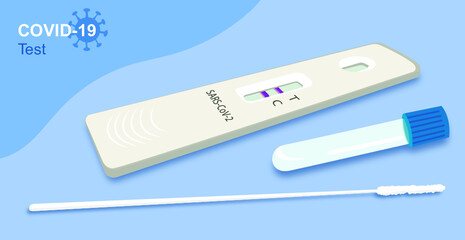
Note su tamponare e tamponarsi da L’Accademia della Crusca.
In oltre alla voce da l’Enciclopedia della Lingua Italiana di Treccani ecco cosa
ho trovato:
“Note su tamponare e tamponarsi” alla redazione {dell’Accademia della
Crusca} sono giunte numerose richieste riguardo al nuovo significato assunto
dal verbo tamponare (anche riflessivo, tamponarsi) in relazione alla
pandemia da COVID-19. Cerchiamo di fare chiarezza.
Con lo scoppio della pandemia causata dal virus SARS-CoV-2, il verbo
tamponare ha subito una rideterminazione semantica (in linguistica si parla
anche di neosemia o di neologismo semantico per indicare il nuovo
significato assunto da una parola già esistente).
Prima del 2020, anno in cui il coronavirus ha iniziato a diffondersi, tamponare
godeva già di un’ampia gamma di accezioni (tuttora vitali): citiamo dal Devoto
-Oli 2022 [Il Devoto-Oli Vocabolario della lingua italiana]:
1. nell’ambito medico di cercare di bloccare una fuoriuscita di sangue (es.
“tamponare la ferita”), anche con uso riflessivo (es. “tamponarsi il naso con
l’ovatta”);
2. nell’ ambiente calcistico di ‘frenare, bloccare i tentativi offensivi
degli avversari’;
3. nella chimica di ‘aggiungere un tampone a una soluzione in modo da
impedirne la variazione di pH’;
4. di chiudere provvisoriamente un’apertura per arrestare il flusso di un liquido;
5. porre un rimedio provvisorio a una situazione critica, arginare, contenere;
6. urtare contro un altro che precede sulla stessa linea di marcia.
A questa lista, dobbiamo dunque aggiungere il nuovo significato, anch’esso di
ambito medico (registrato nel Devoto-Oli 2022), di ‘sottoporre al prelievo di
materiale microbiologico mediante un tampone diagnostico strisciato all’interno
di una cavità anatomica’ (es.“l’ospedale ha tamponato tutto il personale”).
Dal punto di vista morfologico, tamponare è un denominale assegnato alla
prima coniugazione derivato dal sostantivo tampone con il significato di
‘batuffolo asettico di cotone idrofilo fissato all’estremità di una bacchetta,
usato per eseguire prelievi amicrobiologici all’interno di una cavità anatomica;
il prelievo stesso e l’esame che si f di tale prelievo’ (Devoto-Oli 2022) (Per
uno studio linguistico del sostantivo si rimanda a Francesca Cialdini, Tampone,
in LId’O. Lingua italiana d’oggi, 2020).
Il verbo, nel nuovo significato, è stato oggetto di diversi studi incentrati sul
lessico della pandemia (rimandiamo almeno a Daniela Pietrini, La lingua infetta.
L’italiano della pandemia, Roma, Treccani, 2021, p. 14) ed è stato registrato
dalle ultime edizioni di alcuni dizionari italiani (oltre al citato Devoto-Oli 2022,
nello Zingarelli 2022) e dalla sezione Neologismi 2020 della Treccani.
Si può, dunque, affermare che anche questa accezione di tamponare, con valore
transitivo, sia entrata a tutti gli effetti nella lingua italiana.
La prossima volta continueremo con quest’articolo (redato e accorciato da
parte mia) riguardo all’uso di tamponarsi.
Kevin De Vecchis Accademia della Crusca 9 maggio 2022
Notes on tamponare and tamponarsi from the Accademia della Crusca.
In addition to the entry from the Treccani Encyclopedia of the Italian Language,
here's what I found:
"Notes on tamponare and tamponarsi" have reached the editorial staff of the
Accademia della Crusca. We've received numerous inquiries regarding the
new meaning of the verb tamponare (also reflexive, tamponarsi) in relation
to the COVID-19 pandemic. Let's try to clarify.
With the outbreak of the pandemic caused by the SARS-CoV-2 virus, the verb
tamponare hasundergone a semantic reshaping (in linguistics, this is also called
a neosemy or semantic neologism to indicate the new meaning of an existing
word).
Before 2020, the year the coronavirus began to spread, the word "tamponare"
already had a wide range of meanings (still relevant today): we quote from the
Devoto-Oli 2022 [The Devoto-Oli Vocabulary of the Italianlanguage]:
1. in the medical field, to try to stop a blood flow (e.g., "to swab the wound"),
also with a reflexive use (e.g., "to swab one's nose with cotton wool");
2. in football, to "brake, block the opponent's attempts at attack";
3. in chemistry, to "add a cotton swab to a solution so as to prevent its pH
from changing";
4. to temporarily close an opening to stop the flow of a
liquid;
5. to provide a temporary remedy to a critical situation, to contain, to
contain;
6. to bump into another person’s vehicle in front of you traveling in
the same direction.
To this list, we must therefore add the new meaning, also in the medical field
(registered in Devoto-Oli 2022), of 'subjecting to the collection of
microbiological material using a diagnostic swab smeared inside an anatomical
cavity' (e.g. "the hospital swabbed all the staff").
From a morphological perspective, tamponare is a first-conjugated noun derived
from the noun tampon, meaning "an aseptic wad of cotton wool attached to
the end of a wand, used to take microbiological samples from an anatomical
cavity; the sample itself and the examination performed on that sample"
(Devoto-Oli 2022). (For a linguistic study of the noun, see Francesca Cialdini,
Tampone, in LId'O. Lingua italiana d'oggi, 2020).
The verb, in its new meaning, has been the subject of several studies focusing
on pandemic vocabulary (see at least Daniela Pietrini, La lingua infetta.
L’italiano della pandemia, Rome, Treccani, 2021, p. 14) and has been recorded
in the latest editions of several Italian dictionaries (in addition to the
aforementioned Devoto-Oli 2022, in Zingarelli 2022) and in the Neologismi 2020
section ofTreccani.
It can therefore state that this transitive meaning of tamponare
(to administer a COVID test through the use of a cotton swab) has
definitively entered the Italian language.
Next time, we will continue with this article (edited and shortened by me)
regarding the use of tamponarsi.
Kevin De Vecchis Accademia della Crusca 9 maggio 2022
Saturday, February 21, 2026
|
|
TAMPONARE—Parte 1
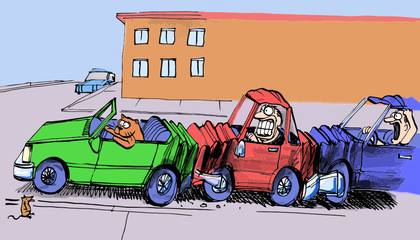
A volte mi pongo una domanda e dopo qualche minuto scopro di aver aperto il vaso di Pandora.
Cosa significa “Tamponare”, almeno cosa significava prima di COVID e cosa significa oggi? La
risposta è abbastanza lunga e interessante, così ne parleremo a puntate.
Secondo l’Enciclopedia della Lingua Italiana di Treccani, il verbo transitivo Tamponare significa:
1. Chiudere con un tampone: tamponare una ferita (vedere tamponamento); tamponarsi il naso
con un batuffolo d’ovatta (in caso di epistassi), ecc.
Per estensione, chiudere una falla in un’imbarcazione con un mezzo di fortuna (tappo, turafalle,
paglietto, ecc.); chiudere provvisoriamente con cenci, stoffa o in altro modo, un’apertura
improvvisamente prodottasi in un recipiente, per arrestare il flusso del liquido: tamponare una
falla in una barca, una rotturain una vasca o in una conduttura. In usi figurati: tamponare una
falla nel patrimonio, tamponare un debito, porvi un rimedio provvisorio e urgente; tamponare
una situazione di emergenza; tamponare la minaccia di una crisi, ecc.
2. Riferito a un veicolo, urtare con la parte anteriore (originariamente, riferito a treni o tram,
con i tamponi o respingenti) un altro veicolo che proceda nella stessa linea di marcia o si trovi
in sosta, investendolo nella parte posteriore: il rapido ha tamponato un treno merci fermo in
stazione; il pesante autotreno tamponò la vettura che aveva bruscamente frenato; sta attento,
con questa nebbia, a non tamponare qualcuno; mi hanno tamponato mentre ero fermo al
semaforo.
3. In chimica, tamponare una soluzione, aggiungervi un tampone.
◆ Part. pass. tamponato, anche come aggettivo, nelle varie accezioni del verbo: falla, ferita,
soluzione tamponata; verificare i danni della vettura tamponata; anche, e per lo più scherzoso,
con riferimento a persona che abbia subìto un tamponamento: l’autista tamponato (o, come
sostantivo, il tamponato, la tamponata) stava discutendo vivacemente con il suo investitore.
La prossima volta parleremo dell’uso di “tamponare” dopo l’arrivo di COVID.
Sometimes I ask myself a question and after a few minutes I discover I've opened Pandora's
box.
What does "Tamponare" mean? At least, what did it mean before COVID, and what does it
mean today? The answer is fairly long and interesting, so we'll discuss it in installments.
According to the Enciclopedia della Lingua Italiana di Treccani (the Treccani Encyclopedia of
the Italian Language), the transitive verb Tamponare means:
1. To plug: to staunch a wound (see tamponamento); to plug one's nose with a cotton ball (in
case of nosebleeds), etc.
Additionally, it means to plug a leak in a boat with a makeshift
device (a cork, a leak stopper, a wad of straw, etc.); to temporarily close a sudden opening in
a container with rags, cloth, or some other means, to stop the flow of liquid: to plug a leak in a
boat, a break in a tank or pipe.
In a figurative sense: to plug a hole in one's assets, to plug a debt, to provide a temporary and
urgent remedy, a stopgap measure; to plug an emergency
situation; to thwart the threat of a
crisis, etc. We would say: slap a bandage on something or do a quick fix.
2. Referring to a vehicle, to hit with the front end (originally, referring to trains or trams, with
their buffers or rear bumpers) of another vehicle proceeding in the same direction or one that
is stationary, hitting it from the rear: the express train hit a freight train stopped at the
station; the heavy tractor-trailer hit the car that had braked abruptly; be careful, in this fog,
not to hit [rear end] someone; they hit me from behind [rear ended me] while I was stopped
at the traffic light.
3. In chemistry, to buffer a solution, to add a buffer.
◆ Past participle “tamponato”, is used also as an adjective, in various senses of the verb:
fault, wound, buffered solution; to check the damage to the rear-ended car; also, and mostly
jokingly, with reference to a person who has been rear-ended: the driver who was rear-ended
(or, as a noun, the rear-ended, the rear-ender) was arguing heatedly with the driver who
rear-ended him.
Next time we'll talk about “tamponare”after the arrival of COVID.
Saturday, February 7, 2026
|
|
C’è spesso confusione riguardo alla traduzione dall’inglese di “BAND”
in contesto musicale.
Una banda musicale, chiamata anche banda o orchestra di fiati è un
complesso musicale composto quasi esclusivamente da strumenti a
fiato (legni e ottoni) e a percussione (grancassa, piatti, ecc.). È diretta
da un unico Maestro direttore ed è solitamente organizzata in
complessi civili o militari, che esegue musica in parate, concerti, feste
ecerimonie, mantenendo vivo un ruolo regionale sociale e culturale. Per
lo più è composta di gruppi dilettantistici e unisce persone di diverse
età, livelli di esperienza, e fasce economiche. (Da non confondersi con
l’orchestra sinfonica).
Ci sono diversi tipi:
1. banda militare, nel passato aveva la funzione d’incoraggiamento
degli eserciti in battaglia;
2. banda da parata: la tradizionale “marching band” comune negli
Stati Uniti ai licei e alle università, è guidata da un ⦁ Tamburo
Maggiore con una mazza (non da un Maestro direttore), è caratterizzata
esclusivamente da strumenti a fiato e a percussione;
3. banda da concerto (orchestra di fiati o banda sinfonica): questa
si esibisce su un palco e non sfila;
4. banda da giro: tipica nel Meridione che in oltre a marce sinfoniche e
musica religiosa eseguisce musica sinfonica, sempre su un palco, non
sfila;
5. fanfara: composta esclusivamente da ottoni, è centrata su marce
militari, pensiamo alla Fanfara dei Bersaglieri;
6. banda di ottoni: composta esclusivamente da ottoni e percussioni,
“brassband”; e
7. non dimentichiamo: complesso rock (rock and roll band), jazz band
e complessi che suonano altri generi di musica come pop, rap, punk,
funk, blues, ecc.
BAND = BANDA?
There is often confusion regarding the English translation of "BAND" in
a musical context.
A marching band, also called a wind band or orchestra, is a musical
ensemble composed almost exclusively of wind instruments (woodwind
and brass) and percussion instruments (bass drum, cymbals, etc.).
Directed by a single Master conductor, it is usually organized into
civilian or military groups, performing music in parades, concerts,
festivals, and ceremonies, maintaining a regional social and cultural
role. It is mostly made up of amateurs and brings together people of
different ages, experience levels, and economic backgrounds. (Not to
be confused with a symphony orchestra.)
There are several types:
1. Military band, which in the past served to encourage armies in
battle;
2. Parade band: the traditional "marching band" common in the United
States at high schools and universities, is led by a Drum Major with a
mace (not a conductor) and features exclusively wind and percussion
instruments;
3. Concert band (wind orchestra or symphonic orchestra): this group
performs on a stage and does not march in parade formation;
4. Touring band: typical in Southern Italy, it performs symphonic
music in addition to marches and religious music; it also is on stage
and does not march in a parade;
5. Fanfare: made up exclusively of brass instruments, it focuses on
military marches, such as the Fanfare of the Bersaglieri. [The
Bersaglieri are the branch of sharpshooters or riflemen/women
belonging to the special light infantry corps in the Italian army. They
are recognizable by their typical hat with fluttering rooster feathers.];
6. Brass band: composed exclusively of brass and percussion
instruments; and
7. Let's not forget: rock bands (rock and roll bands), jazz bands, and
bands that play other genres of music such as pop, rap, punk, funk,
blues, etc.
Saturday, January 24, 2026
|
|
CORNETTO o CORNETTA, qual è la differenza?

Cari lettori, è vero che avete indovinato che mi piacciono le parole?
CORNETTO:
1. Una brioche: Spesso in Italia si prende un cappuccino e un
cornetto per colazione.
2. Un amuleto a forma di corno: Ho sempre trovato
interessante il fatto che alcuni italiani portano ciondoli diversi
appesi a una catenina intorno al collo: un cornetto per
scacciare il malocchio e unamedaglia della madonna per
protezione.
3. Uno strumento acustico: Il mio bisnonno era sordo e
usava un cornetto per poterci sentire meglio.
4. Un fagiolino: In Veneto abbiamo mangiato molti cornetti
per contorno.
5. Il famoso gelato di Algida: D’estate a Pescara, ogni
pomeriggio ci fermavamo lungomare per comprare un cornetto
Algida
.
CORNETTA:
1. Uno strumento a fiato: Non è facile suonare la cornetta,
sono necessari dei buoni polmoni.
2. Un suonatore dello strumento: Herbert L. Clarke è
considerato il migliore cornetta del 20° secolo.
3. Il ricevitore: Alessandra ha alzato la cornetta del telefono
subito dopo il primo squillo.
4. La pigna della doccia: L’idraulico ha istallato una nuova
cornetta nella doccia, adesso non devo più reggere il telefono,
è molto comodo.
CORNETTO or CORNETTA, what's the difference?
Dear readers, have you guessed that I like words?
CORNETTO:
1. A brioche/ croissant: In Italy, we often have a
cappuccino and a croissant for breakfast.
2. A horn-shaped amulet: I've always found it interesting
that some Italians wear different charms on a chain
around their necks: a cornetto to ward off the evil eye and
a medal of theMadonna for protection.
3. An acoustic instrument: My great-grandfather was deaf
and used an ear trumpet to help him
4. Green beans/haricots verts: In Veneto, we ate a lot of
cornetti as a side dish.
5. The famous Algida ice cream: During the summers in
Pescara, every afternoon we stopped on the seafront to
buy an Algida ice cream cone.
CORNETTA:
1. A wind instrument: It's not easy to play the cornet; you
need good lungs.
2. A cornet player: Herbert L. Clarke is considered the best
cornetist of the 20th century.
3. The phone receiver: Alessandra picked up the receiver
immediately after the first ring.
4. A fixed shower head: The plumber installed a new head
in the shower, now I no longer have to hold the handset;
it's very convenient.
Saturday, January 17, 2026
|
|
|
|
|





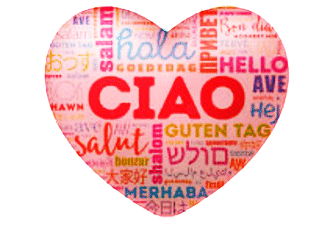


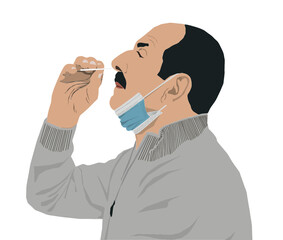
.jpg)