|
|
Blog Pages/Years

|
|
| |

|
|
| |

Come si formano gli avverbi in italiano?
Per gli avverbi derivati esistono due suffissi:
--mente
--oni
Per gli avverbi che terminano in –mente ci sono i seguenti modi:
1. Prendiamo il femminile singolare di un aggettivo che al maschile termina
in “o” e aggiungiamo il suffisso “mente”.
Per esempio: simpatica + mente = simpaticamente; Maria
mi ha salutato simpaticamente; lenta + mente =
lentamente; Bisogna guidare lentamente quando piove.
2. Per gli aggettivi che terminano in -e al singolare, sono a forma unica:
aggiungiamo il suffisso “mente”
.
Per esempio: veloce + mente = velocemente; Marco ha guidato
velocemente e gli hanno dato una multa per eccesso di velocità.
3. Per gli aggettivi che hanno come ultima sillaba “le”,
“lo”, “re” e “ro” perdono la vocale finale e aggiungiamo –mente,
per esempio:
(a) “le”: difficile + mente = difficilmente
(b) “lo”: benevolo + mente = benevolmente
(c) “re”: particolare + mente = particolarmente
(d) “ro”: leggero + mente = leggermente
Per gli avverbi che terminano in–oni, questo suffisso è unito a un nome o
a un verbo si usa in un numero limitato di casi, per indicare un modo di
stare o di procedere, per esempio:
bocca = oni = bocconi. Simone ha bevuto troppo ieri sera, e si è
addormentato a bocconi.
carpare = oni = carponi. I bambini si divertono acamminare a carponi
come il loro cane.
tentare = oni = tentoni. La stanza
era così buia, che siamo dovuti avanzare a tentoni.
THE ADVERB—Part two—formation:
How do we form adverbs in Italian?
There are two suffixes for derived adverbs:
--mente--oni
For adverbs ending in -mente, there are the following forms:
1. Take the feminine singular of an adjective that ends in "o" in the
masculine and add the suffix "mente".
For example: simpatica + mente =
simpaticamente; Maria greeted me in a friendly manner; lenta + mente =
lentamente; You have to drive slowly when it rains.
2. For adjectives ending in -e in the singular, they have a unique form: add
the suffix "mente".
For example: veloce + mente = velocemente; Marco
drove rapidly and was given a speeding ticket.
3. For adjectives that end with the syllables "le," "lo," "re," and "ro", drop
the final vowel and add -mente, for example:
(a) "le": difficile + mente = difficultly
(b) "lo": benevolent + mente = benevolently
(c) "re": particolare + mente = particularly
(d) "ro": leggero + mente = slightly/lightly
For adverbs ending in -oni, this suffix is attached to a noun or verb and is
used in a limited number of cases to indicate a state of being or of
proceeding/acting,for example:
bocca =oni = bocconi. Simone drank too much last night and fell asleep
facedown.
carpare = oni = crawling. The children enjoy crawling on all fours like their
dog.
tenta = oni = groping. The room was so dark, we had to grope our way
forward.
Saturday, November 15, 2025
|
|
Se andate a cercare la traduzione di “PRESS” dall’inglese all’italiano,
state attenti, ce ne sono molte. Oggi ci limitiamo alla parola “STAMPA”.

Ci rivolgiamo al Dizionario di italiano, il Sabatini Coletti del Corriere della
Sera.
Questa parola che è stata introdotta nella lingua italiana nel secolo XV,
significa:
1. Tecnica di riproduzione in più esemplari, su carta o altro materiale, di testi
scritti, disegni o fotografie, a partire da una matrice e mediante procedimenti
diversi; l'operazione di stampare e il risultato di tale procedimento: opera in
corso di stampa || dare alle stampe, pubblicare.
2. Pubblicazione di testi stampati, soprattutto di giornali, periodici e libri || li
bertà di stampa, diritto di scrivere e pubblicare il proprio pensiero | reati di,
a mezzo stampa., quelli di diffamazione, istigazione a delinquere, offesa al
pudore ecc., commessi pubblicando testi a stampa.
3. Complesso delle pubblicazioni a carattere giornalistico: stampa quotidiana,
periodica || avere, godere di buona, di cattiva stampa, avere buona o cattiva
fama | rassegna (della) stampa, rubrica radiofonica o televisiva in cui si
presentano i titoli e i principali articoli dei giornali | ufficio stampa, in
aziende, enti, partiti, quello preposto a redigere e inoltrare comunicati agli
organi di informazione e a intrattenere relazioni con il mondo giornalistico |
comunicato stampa, dichiarazione trasmessa agli organi di informazione
giornalistica.
4. (estensione) Insieme dei giornalisti: sciopero della stampa.
5. (estensione, specialmente al plurale) Stampati di vario genere, in
particolare quelli spediti per posta: affrancatura per le stampe.
6. Riproduzione, mediante il procedimento dell'incisione, di un'opera grafica
di rilievo artistico.
7. (fotografia) Procedimento con cui si ricava dal negativo di una pellicola
una o più copie in positivo; copia positiva stampata su carta: stampa
fotografica.
8. (letterario) Carattere, indole; in senso spregiativo, sorta, specie: non
frequento gente di quella stampa.

Forse dovremmo tenere una conferenza stampa per imparare questi
significati!
If you're looking for a translation of "PRESS" from English to Italian, be
careful—there are many. Today, we will limit ourselves to the word "STAMPA."
We turn to the Italian Dictionary, the Sabatini-Coletti edition of Corriere
della Sera.
This word, which was introduced into the Italian language in the 15th
century, means:
1. The technique of reproducing written texts, drawings, or photographs in
multiple copies, on paper or other material, starting from a single matrix and
using various processes; the operation of printing and the result of this
process: work in progress || to print, to publish.
2. Publication of printed texts, especially newspapers, periodicals, and books
|| freedom of the press, the right to write and publish one's own thoughts ||
[to publish] crimes of, through the press, such as defamation, incitement to
crime, offenses against public decency, etc., committed by publishing printed
texts.
3. A group of journalistic publications: daily or periodical press || to have,
enjoy good or bad press, to have a good or bad reputation | a press review,
a radio or television program presenting newspaper headlines and most
important articles | a press office, in companies, organizations, or political
parties, responsible for drafting and forwarding press releases to the media
and maintaining relations with the journalistic world | a press release, a
statement sent to the media.
4. extension: A group of journalists: strike of the press.
5. extension: (especially in plural form) Various types of printed matter,
especially those sent by mail: postage for printed matter.
6. Reproduction: through the process of engraving, of a graphic work of
artistic importance.
7. Photography: Process by which one or more positive copies are obtained
from a film negative; positive copy printed on paper: photographic material.
8. Literary: Character, disposition; in a derogatory sense, sort, species: I
don't hang out with people of that type.
Perhaps we should hold a press conference to learn these meanings!
Saturday, October 25, 2025
|
|
| |
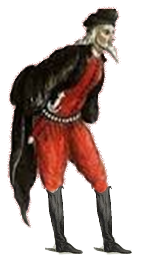 PERSONAGGIO O CARATTERE? PERSONAGGIO O CARATTERE? 
Troppo spesso i miei studenti parlano di un “carattere” in un libro
che stanno leggendo, e ogni volta li devo correggere, la parola
corretta non è “carattere” ma “personaggio”. Questa settimana
esaminiamo la differenza tra i due.
Un personaggio è l'entità che agisce all’interno di una storia. Può
essere una persona, un animale, un oggetto o anche un'idea
astratta. Si trova in un romanzo, un film, uno spettacolo teatrale,
ecc. Viene definito anche in base al suo ruolo nella narrazione:
protagonista, antagonista, coprotagonista, secondario, comparsa,
e via dicendo.
Per esempio:
1. Nel film Il settimo sigillo di Ingmar Bergman, vediamo il
personaggio della Grande Mietitrice, la personificazione della
morte.
2. Il personaggio di Moby Dick, è entrambi una balena e una
metafora dell’ossessione del Capitano Achab.
3. L’Ispettore Salvo Montalbano è il personaggio principale dei
libri gialli di Andrea Camilleri e di una serie televisiva.
4. I personaggi della Commedia dell’arte sono facilmente
riconoscibili.
Se parliamo invece di qualità morale, natura, temperamento,
personalità, usiamo la parola carattere o indole. Quali sono il
temperamento, i desideri, le paure, le motivazioni del
personaggio? In altre parole, quali sono i tratti psicologici che
lo/la definiscono.
Per esempio:
1. Questi giorni ci sono dubbi sul carattere dei rappresentanti
governativi; è molto triste.
2. Tutti speravano che Giovanni fosse nato per fare il poliziotto,
ma aveva un carattere dolce e pacifista.
3. Chi la conosce bene, dice che Cristina ha un carattere duro ma
generoso.
4. Il personaggio Pantalone è un vecchio mercante veneziano
della Commedia dell’arte il cui carattere è avaro e lussurioso.

All too often my students use the Italian term “carattere” to refer
to a character in a book they are reading, and every time I have
to correct them, the proper term is “personaggio”. This week let’s
look at the difference between the two words.
A character (“personaggio”) is an entity that acts within a story. It
can be a person, an animal, an object, or even an abstract idea. It
appears in a novel, a film, a play, etc. It is also defined based on
its role in the narrative: protagonist, antagonist, co-star,
secondary character, extra, and so on.
For example:
1. In Ingmar Bergman's film The Seventh Seal, we see the
character of the Grim Reaper, the personification of death.
2. The character of Moby Dick is both a whale and a metaphor for
Captain Ahab's obsession.
3. Inspector Salvo Montalbano is the main character in the
detective novels by Andrea Camilleri as well as in a television
series.
4. The character Pantalone is an old Venetian merchant in the
Commedia dell’Arte whose character is miserly and lustful.
If, on the other hand, we speak of moral qualities, nature,
temperament, or personality, we use the terms “carattere” or
“indole”. What are the temperament, desires, fears, and
motivations of the character? In other words, what are the
psychological traits that define him or her?
For example:
1. These days there is doubt regarding the moral character of the
members of government; it’s very sad.
2. Everyone hoped that Giovanni was born to be a police officer,
but he had a sweet and pacifist disposition/character.
3. Those who know her well say that Cristina has a tough but
generous personality/character.
4. The character Pantalone is an old Venetian merchant in the
Commedia dell'Arte whose character is greedy and lustful.
Saturday, October 18, 2025
|
|

In inglese è facile, si aggiunge “in-law” alla parola madre, fratello, ecc. In italiano
è un’altra storia! Si dice “imparentato attraverso il matrimonio, o parente
acquisito attraverso il matrimonio” per descrivere la categoria, o parole individuali
per ciascun parente.
 Ecco la lista: Ecco la lista: |
Here is the list: |
| cognata |
sister-in-law |
| cognato |
brother-in-law |
| genero |
son-in-law |
| marito della cugina |
cousin-in-law (male) |
| moglie del cugino |
cousin-in-law (female) |
| nuora |
daughter-in-law |
| progenero |
grandson-in-law |
| pronuora |
granddaughter-in-law |
| suocera |
mother-in-law |
| suocero |
father-in-law |
| suoceri/parenti acquisiti |
in-laws |
In English, it’s easy, we add “in-law” to the word mother, brother, etc. In Italian,
it’s an entirely different story. We say “related through marriage, or a relative
acquired through marriage” to describe the category, or individual words for
each relative.
Saturday, Septmber 18, 2025
|
|
SPENDERE E SPANDERE è una locuzione comune che indica l’atto di
sperperare denaro in modo eccessivo, senza moderazione. Per
esempio: Silvio e Melania spendono e spandono come miliardari.
Diamo un’occhiata a ciascun verbo individualmente perché hanno
significati distintivi. Secondo il Dizionario di Italiano il Sabatini
Coletti, pubblicato dal il Corriere della Sera:
SPANDERE (che è entrato a far parte del lessico nel XIII secolo)
significa:
1. Stendere in modo uniforme qualcosa su una superficie: Per
esempio: Spandere la cera sul pavimento.
2. Far cadere involontariamente qualcosa su una superficie: Per
esempio: Spandere la farina per terra.
3. (figurativamente) Emanare, diffondere qualcosa nell'ambiente
circostante: Per esempio: il caminetto spande tepore nella stanza
.
4. Divulgare notizie: Per esempio: il giornale ha spanto le notizie
dell’arresto del piromane.
Alla forma riflessiva: spandersi:
1. Diventare sempre più largo: Per esempio: la macchia si sta
spandendo.
2. Circolare, diffondersi (figurativamente): Per esempio: si sta
spandendo la voce di una tregua.
3. Diffondersi, propagarsi in un certo spazio: Per esempio: un
profumo si spande nell'aria.
SPENDERE (che è entrato a far parte del lessico nel XIII secolo)
significa:
· Versare una somma come pagamento per un acquisto, una
prestazione o un servizio; (sinonimi sono pagare, sborsare): Per
esempio: per l'acquisto della casa ho speso molto.
(figurativamente) spendere un occhio della testa, un patrimonio,
pagare una somma esagerata
· (figurativamente) Trascorrere un periodo di tempo in un certo
modo. Il complimento predicativo può essere espresso da un
gerundio: Per esempio: spendere le sere studiando; da un avverbio:
Per esempio: devi spendere bene la tua vita; da un infinito
introdotto da a: Per esempio: ho speso molto tempo a correggere i
compiti
· (figurativamente) Trascorrere il tempo in un luogo: Per esempio:
spendere la mattinata al bar; impiegare, dedicare tempo o risorse
per un dato fine, specialmente con il secondo argomento espresso
da una frase (introdotta da per): Per esempio: ha speso le sue
energie in un'impresa irrealizzabile; Potresti spendere qualche
minuto per ascoltarmi! Spendere una parola per qualcuno, parlare
a suo favore.
· Fare acquisti, spese: Per esempio: spendere nel vestire || saper
spendere, usare in modo oculato il denaro
SPENDERE E SPANDERE is a locution that translates as Spending
and squandering: This familiar verbal expression refers to the act
of wasting money excessively and without moderation. For example,
Don and Melanie “spend and squander” like billionaires.

Let’s look at each verb individually, because they have distinct
meanings. According to the Dizionario di Italiano il Sabatini Coletti,
published by il Corriere della Sera:
SPANDERE (which entered the lexicon in the 13th century) means:
1. To spread something evenly over a surface: For example: To
spread wax on the floor.
2. To accidentally drop something on a surface: For example: To
spill flour on the floor.
3. (figuratively) To emanate, spread somethinginto the surrounding
environment: For example: The fireplace spreads warmth into the
room.
4. To spread news: For example: The newspaper spread the news
of the arsonist's arrest.
In the reflexive form: to spread (itself):
1. To become increasingly larger: For example: The stain is
spreading.
2. To circulate, to spread (figuratively): For example: Word of a
truce is spreading. 3. To spread, to propagate in a defined space:
For example: A perfume spreads through the air.
SPENDERE (which entered the lexicon in the 13th century) means:
• To pay a sum of money for a purchase, service, or good;
(synonyms are to pay, to shell out): For example: I spent a lot on
buying a house. (figuratively) To spend an arm and a leg, a fortune,
to pay an exorbitant sum.
• (figuratively) To spend a period of time in a certain way. The
predicative compliment can be expressed by a gerund: For example:
To spend the evenings studying; by an adverb: For example: You
must spend your life well; by an infinitive introduced by “a”: For
example: I spent a lot of time correcting my homework.
• (figuratively) To spend time in a place: For example: To spend the
morning at the bar; to employ, dedicate time or resources to a
given goal, especially with the second argument expressed by a
clause (introduced by “per”): For example: He spent his energies
on an unattainable undertaking; Could you please take a few
minutes to listen to me? To say a word for someone, to speak in
their favor.
• To make purchases, expenses: For example: to spend on clothing
|| to know how to spend, to use money wisely
Saturday, Septmber 6, 2025
|
|
L’ORIGINE STRANIERA DEI LEMMI ITALIANI:
|

Ho incominciato questa ricerca a base di una domanda fattami da una studentessa:
“Quali sono le parole italiane derivate dal greco?” e sono finita in una tana del
coniglio. Perciò, mi limito a riprodurre una tabella di Luca Lorenzetti inclusa in uno
dei suoi saggi presenti nell’Enciclopedia dell’italiano diretta da Raffaele Simone per
la Treccani. Questa tabella conteggia i prestiti da altre lingue, sulla base del
lemmario di un grande dizionario dell’uso, il GRADIT di Tullio De Mauro
(230mila lemmi).
PROVENIENZA |
ADATTATI |
NON ADATTATI |
TOTALE |
Greco |
8342 |
13 |
8355 |
Inglese |
1989 |
4303 |
6292 |
Francese |
3517 |
1465 |
4982 |
Spagnolo |
792 |
263 |
1055 |
Tedesco |
360 |
288 |
648 |
Arabo |
430 |
203 |
633 |
Russo |
166 |
86 |
252 |
Provenzale |
240 |
|
240 |
Giapponese |
86 |
126 |
212 |
Portoghese |
161 |
48 |
208 |
Turco |
127 |
45 |
172 |
Longobardo |
114 |
|
114 |
Ebraico |
77 |
36 |
113 |
Hindi |
67 |
12 |
79 |
Sanscritto |
|
66 |
66 |
Cinese |
44 |
18 |
62 |
Persiano |
48 |
|
48 |
(Informazioni riprodotte dall’Istituto della Enciclopedia Italiana fondata da
Giovanni Treccani)
I began this research based on a question a student posed: "What Italian
words are derived from Greek?" and ended up down a rabbit hole. Therefore,
I'll simply reproduce a table by Luca Lorenzetti found in one of his essays in the
Enciclopedia dell'italiano edited by Raffaele Simone for Treccani. This table lists
loanwords from other languages, based on the glossary of a major usage
dictionary, Tullio De Mauro's GRADIT (230,000 entries).
Terms of foreign origin in Italian:
PROVENANCE |
ADAPTED |
NOT ADAPTED |
TOTAL |
Greek |
8342 |
13 |
8355 |
English |
1989 |
4303 |
6292 |
French |
3517 |
1465 |
4982 |
Spanish |
792 |
263 |
1055 |
German |
360 |
288 |
648 |
Arabic |
430 |
203 |
633 |
Russian |
166 |
86 |
252 |
Provencal |
240 |
|
240 |
Japanese |
86 |
126 |
212 |
Portuguese |
161 |
48 |
208 |
Turkish |
127 |
45 |
172 |
Langobardic |
114 |
|
114 |
Hebrew |
77 |
36 |
113 |
Hindu |
67 |
12 |
79 |
Sanskrit |
|
66 |
66 |
Chinese |
44 |
18 |
62 |
Persian |
48 |
|
48 |
(Information reproduced from the Institute of the Italian
Encyclopedia founded by Giovanni Treccani)
Saturday, August 23, 2025
|
|
LA POSIZIONE DEGLI AGGETTIVI INDIVIDUALI—Parte 4

Come abbiamo visto in precedenza, a differenza dall’inglese dove
gli aggettivi di solito precedono il sostantivo, in italiano la loro
posizione varia a seconda della loro funzione. In alcuni casi, la
posizione dell’aggettivo cambia il suo significato. Ecco la
continuazione di alcuni degli aggettivi più comuni in questa
categoria:
As we have already seen, unlike English where adjectives usually
precede the noun, in Italian their position varies depending on
their function. In some cases, the placement of the adjective
changes its meaning. Here is a continuation of some of the most
common adjectives in this category:
| PRIMA DEL SOSTANTIVO |
SIGNIFICATO/MEANING |
DOPO IL SOSTANTIVO |
SIGNIFICATO/MEANING |
| Una leggera ferita |
A slight wound |
Una valigia leggera |
A light-weight suitcase |
| Il massimo rispetto |
The utmost respect |
La velocità massima |
The maximum speed/speed limit |
Un povero uomo |
An unfortunate man |
Un uomo povero |
A poor man |
La stessa ragazza |
The same girl |
La ragazza stessa |
The girl herself |
Una semplice domanda |
A mere/simple question |
Una domanda semplice |
An easy question |
L’unica occasione |
The only opportunity |
Un’occasione unica |
A unique opportunity |
L’unico figlio |
The only child |
Figlio unico |
A one-of-a-kind child |
Varie volte |
Several times/sometimes |
Un panorama vario |
A varied panorama |
Un vecchio amico |
A longstanding/old friend |
Un amico vecchio |
An old (aged) friend |
Adesso tocca a voi usarli in una frase per impararli meglio.
Now it’s your turn to use them in a sentence to better learn them.
Saturday, August 9, 2025
|
|
Come abbiamo visto in precedenza, a differenza dall’inglese dove gli aggettivi di
solito precedono il
sostantivo, in italiano la loro posizione varia a seconda della
loro funzione. In alcuni casi, la posizione dell’aggettivo cambia il suo significato.
Ecco alcuni degli aggettivi più comuni in questa categoria:
As we have already seen, unlike English where adjectives usually precede the
noun, in Italian their position varies depending on their function. In some cases,
the placement of the adjective changes its meaning. Here are some of the most
common adjectives in this category:
| PRIMA DEL SOSTANTIVO |
SIGNIFICATO/MEANING |
DOPO IL SOSTANTIVO |
SIGNIFICATO/MEANING |
| Gli antichi greci |
The ancient Greeks |
Un vaso antico |
An old/antique vase |
| Un alto ufficiale |
A high-ranking officer |
Una ragazza alta |
A tall girl |
| L’alta Italia (il settentrione) |
Northern Italy |
Un muro alto |
A high wall |
| La bassa Italia (il meridione) |
Southern Italy |
Una donna bassa |
A short woman |
| Il basso Po |
The lower (part) of the river |
Po Un voto basso |
A low grade (as on a test) |
|
Una cara amica |
A dear friend |
Una cena cara |
An expensive dinner |
| Certe notizie |
Some news |
Notizie certe |
Reliable news |
| Un discreto risultato |
A good/decent result |
Un prezzo discreto |
A reasonable price |
| Una discreta età |
A considerable age |
Una domanda discreta |
A discrete question |
| Diversi libri |
Several books |
Libri diversi |
Different books
|
Adesso tocca a voi di usarli in una frase per impararli meglio. La prossima volta
vedremo altri di questi
aggettivi. Divertitevi!
Now it’s your turn to use them in a sentence to better learn them. Next time we
will see moreof these types of adjectives. Have fun!
Saturday, July 26, 2025
|
|
LA POSIZIONE DEGLI AGGETTIVI INDIVIDUALI—Parte 2
Molti aggettivi italiani possono precedere o seguire il sostantivo a seconda
della loro funzione: 1.specificante o restrittiva oppure 2. generica. Gli
aggettivi generici sono usati a scopo descrittivo, retoricoo metaforico. La
maggior parte degli aggettivi che appartengono a questa categoria ha
significati piuttosto ampi. La loro flessibilità permette di variare il loro
significato a seconda del contesto. Alcuni degli aggettivi più comuni sono:
anziano, bello, brutto, buono, cattivo, giovane, grande, lungo, nuovo,
piacevole, piccolo, simpatico, strano. Quando sono posti prima del sostantivo
forniscono una descrizione generica e soggettiva; quando sono posti dopo,
individuano e identificano caratteristiche specifiche.
Esempi:
|
PRIMA DEL NOME: |
DOPO IL NOME: |
| |
|
descrizioni generiche/soggettive
|
funzione specificativa: oggettiva |
| È una grande amica. |
Ho molta sete, vorrei un bicchiere grande d'acqua. |
| È una buona soluzione. |
È una soluzione buona. |
| Maria si è comprata un bel vesitito. |
Maria si è messa il vestito bello questa sera. |
| C'è una lunga fila alla biglietteria. |
Ho scelto la gonna lunga rossa. |
| Tutto il santo giorno. |
Lo Spirito Santo. |
THE POSITION OF SINGLE ADJECTIVES—Part 2
Many Italian adjectives can precede or follow the noun depending on
their function: 1. If it isspecifying or restrictive or 2. Generic. Generic
adjectives are used for descriptive, rhetorical or metaphorical purposes.
Most of the adjectives that belong to this category have fairly broad
meanings. Their flexibility allows them to vary their meaning depending
on the context. Some of the most common adjectives are: old, beautiful,
ugly, good, bad, young, big, long, new, pleasing, small, nice, strange.
When they are placed before the noun they provide a generic, subjective
description; when placed after they pinpoint and identify specific
characteristics.
Examples:
| BEFORE THE NOUN: |
AFTER THE NOUN: |
| |
|
| generic/subjective descriptions |
specifying function: objective |
| She is a great friend. |
I’m very thirsty, I would like a large glass of water. |
| It’s a good result. |
It’s a right/good result. |
| Mary bought herself a lovely dress. |
Mary put on her best dress this evening. |
| There’s a long line at the ticket window. |
I chose the long red skirt. |
| The whole blessed day. |
The Holy Spirit. |
Saturday, July 12, 2025
|
|
LA POSIZIONE DEGLI AGGETTIVI INDIVIDUALI—Parte 1
A differenza dall’inglese dove gli aggettivi di solito precedono il sostantivo, in
italiano la loro posizione varia a seconda della loro funzione.
Siccome c’è molto da spiegare, divido questo tema in 3 parti.
La maggior parte degli aggettivi descrittivi italiani seguono il nome quando
hanno una funzione specifica, cioè quando evidenziano caratteristiche
specifiche o tratti distintivi del nome.
1. Aggettivi che indicano una categoria (spesso derivano da un sostantivo).
Ad esempio: la guerra mondiale; un cane di razza; una crisi politica; uno
sperimento chimico
2. Aggettivi che indicano nazionalità o origine, religione, ideologia. Ad
esempio: una donna messicana, uno studente abruzzese, una chiesa battista,
un partito liberale
3. Aggettivi che indicano colore, forma, disegno, materiale. Ad esempio: una
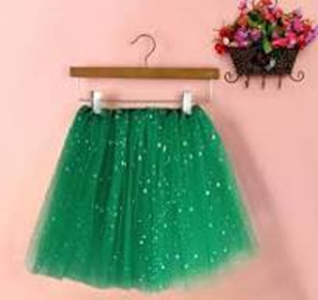
gonna verde, una palla rotonda, una giacca a righe, un cappotto di lana, una
piazza polverosa
4. Aggettivi derivati da un participio passato (di solito terminanti in -ato, -ito,
o -uto) e alcuni derivati da un participio presente (terminanti in -ante o -ente).
Ad esempio: una strada bagnata, un piatto pulito, una commissione compiuta,
un amico tollerante, una tazza di caffè bollente
5. Aggettivi con suffisso come -ino o -etto. Ad esempio: un gattino piccolino,
una bambina furbetta
6. Aggettivi usati con un avverbio: molto, abbastanza, piuttosto, troppo, poco.
Ad esempio: una donna molto simpatica, un libro abbastanza interessante, un
articolo troppo lungo, un’artista poco conosciuta
7. Sintagmi aggettivali che di solito fanno parte dei punti 1, 2 e 3 sopra. Un
sintagma aggettivale è un gruppo di parole che funge da aggettivo per
modificare un nome o un pronome. Ad esempio: un esame sorprendentemente
facile, pochissimi suggerimenti utili, una storia d'amore
Unlike English where adjectives usually precede the noun, the majority of
Italian descriptive adjectives follow the noun when they have a specifying
function, i.e. when they pinpoint specific characteristics or distinguishing
features of the noun.
1. Adjectives denoting a category (the are often derived from a noun). For
example: the world war; a purebred dog; a political crisis; a chemical
experiment
2. Adjectives denoting nationality or origin, religion, ideology. For example: a
Mexican woman, a student from Abruzzo, a Baptist church, a liberal party
3. Adjectives denoting color, shape, design, material. For example: a green
skirt, a round ball, a striped jacket, a wool coat, a dusty square
4. Adjectives derived from a past participle (usually ending in -ato,
-ito, or -uto) and some derived from a present participle
(ending in -ante or -ente). For example: a wet road, a clean plate, an errand
done, a tolerant friend, a cup of hot coffee
5. Adjectives with a suffix like -ino or -etto. For example: a little kitten, a
clever little girl
6. Adjectives used with an adverb—very, quite, rather, too, little. For example:
a very nice woman, a fairly interesting book, a too-long article, a little-known
artist
7. Adjectival phrases which are usually part of 1, 2 and 3 above. An adjectival
phrase is a group of words that functions as an adjective to modify a noun or
pronoun. For example: a surprisingly easy test, a very few helpful hints, a
love story
Saturday, June 28, 2025
|
|
C’è una parola che piace molto ai miei studenti: FIGURATI.
Il significato cambia secondo l’uso.
1. Figurati = prego
Questo è l’uso più semplice e comune; per esempio:
· Massimiliano: “Grazie per esserti ricordata del mio
compleanno.”
Caterina: “Figurati.”
· Massimiliano: “Veramente, non soltanto un biglietto
di auguri, ma anche un mazzo di fiori. Sei gentilissima!”
Caterina: “Ma figurati. Veramente, è un piacere.”
2. Figurati = assolutamente no
È usato in questo senso per una negazione fortissima; per esempio:
· Domanda: “Che ne pensi se andiamo in Egitto per le ferie d’agosto?”
Risposta: “Sei pazzo, figurati se vado lì in piena estate, lo sai che non sopporto
il caldo.”
· Domanda: “Secondo te, Maddalena e Pietro si sposeranno?”
Risposta: “Figurati, non fanno altro che litigare!”
3. Figurati = ma va, non credo
È usato in questo senso per esprimere dubbio o incertezza; per esempio:
· Domanda: “È già arrivata Elisabetta?”
Risposta: “Di solito è in ritardo, figurati se riesce ad arrivare in orario.”
· Domanda: “Quest’anno per il compleanno di Massimiliano, pensi di organizzare
una festa?”
Risposta:“Figurati. Perché non ci pensi tu?”
4. Figurati = non ti preoccupare, non ci sono problemi
È usato in questo senso per far sentire meglio qualcuno per una mancanza; per
esempio:
· Caio*: “Scusami Gelsomina se ho vuotato il sacco riguardo alla festa a
Massimiliano.”
Gelsomina: “Figurati, Massimiliano ne era già al corrente, era Tizio* il primo a
dirglielo!”
· Sempronio*: “Mi dispiace se ho fatto un macello.”
Giovanna: “Figurati, per fortuna era solo mezzo bicchiere d’acqua, non vino rosso!”
There is a word that my students like very much:FIGURATI.
It’s meaning varies according to its use.
1. Figurati = you are welcome
This is its simplest and most common use. For example:
• Maximilian: “Thank you for remembering my birthday.”
Catherine: “Figurati.”
• Maximilian: “Really, not only a birthday card, but a bouquet of flowers as well.
You are very kind!”
Catherine: “But figurati. Truly, it’s a pleasure.”
2. Figurati = absoultely not
In this case it is used as a very strong denial. For example:
• Question: “What do you think if we go to Egypt for summer vacation?”
Answer: “Are you crazy, figurati if I would go there in the height of summer.
You know I can’t stand the heat.”
• Question: “What do you think, will Maddalena and Peter get married?”
Answer: “Figurati, all they do is fight!”
3. Figurati = no way, I don’t think so
In this case it is used to express doubt or uncertainty. For example:
• Question: “Has Elisabetta arrived yet?”
Answer: “She’s usually late, figurati if she can arrive on time.”
• Question: “This year, for Maximilian’s birthday, are you thinking about
throwing him a party?”
Answer: “Figurati. Why don’t you take care of it?”
4. Figurati = don’t worry, no problem
In this case it is used to help someone feel better for an error they committed.
For example:
• Tom*: “Forgive me Jasmine if I spilled the beans regarding Max’s party.”
Jasmine: “Figurati, Max knew about it already, Dick* was the first to tell him!”
• Harry*: “I’m sorry if I made a mess.”
Joanne: “Figurati, luckily it was only a glass of water, not red wine!”
*Tizio, Caio & Sempronio translate into English as Tom, Dick & Harry.
Saturday, June 14, 2025
|
|

Quali sono le derivazioni di parole che terminano in -ISTA E -ISTICO?
Ci riferiamo all’enciclopedia Treccani per una spiegazione dettagliata.
Siccome si tratta di due suffissi diversi, divido il chiarimento in due parti.
Oggi parliamo di -ISTICO.
Il suffisso -istico è composto da -ista + -ico (dal latino -icus, a sua volta
dal greco -ikòs).
- Si trova in aggettivi formati modernamente:
arte ▶ artistico
calcio ▶ calcistico
- Per lo più connessi con nomi in -ista:
alpinista ▶ alpinistico
egoista ▶ egoistico
turista ▶ turistico
- Alcuni aggettivi in -istico possono assumere una connotazione
spregiativa
elettorale ▶ elettoralistico
intellettuale ▶ intellettualistico
- La forma femminile sostantivata -istica è usata nella formazione di
nomi di discipline, tecniche, metodologie o attività, spesso a partire da
forme in -ista o -istico
anglista ▶ anglistica (‘disciplina che studia la letteratura
inglese’)
favolistico ▶ favolistica (‘disciplina che studia le favole’)
oculista ▶ oculistica (‘branca della medicina che si occupa
dell’occhio’)
- Ma anche a partire da altre parole
componente ▶ componentistica
infortunio ▶ infortunistica
- L’uso si è spinto fino a un valore puramente collettivo
manuale ▶ manualistica (‘insieme dei manuali su un dato
argomento’)
oggetto ▶ oggettistica (‘insieme degli oggetti, soprattutto
per la casa’)
trattato ▶ trattatistica (‘insieme dei trattati su una
determinata disciplina’)
- Una variante del suffisso -istico è la forma -astico, che può essere
usata se la base termina in -a
orgia ▶ orgiastico
prosa ▶ prosastico.
Dubbi:
Esistono alcune coppie di aggettivi in -ista / -istico:
entusiasta / entusiastico
femminista / femministico
imperialista / imperialistico
positivista / positivistico
socialista / socialistico
Per lo più si tratta di sinonimi, in cui è difficile distinguere una sfumatura di
significato e di registro. Talora si può cogliere, soprattutto con l’aiuto del
contesto, nell’aggettivo in -istico una sfumatura leggermente dispregiativa.
1. It is found in modern adjectives:
art ▶ artistic
soccer ▶ football
2. Of which, most of them are connected to nouns ending in -ista:
mountaineer ▶ mountaineering
egoist ▶ egoistic
tourist ▶ touristic
3. Some adjectives ending in -istico can take on a derogatory connotation
electoral ▶ electoral
intellectual ▶ intellectualistic
4. The feminine noun form -istica is used in the formation of names of
disciplines, techniques, methodologies or activities, often starting from forms
ending in -ista or -istico
Anglist ▶ Anglo studies (‘discipline that studies English
literature’)
fables ▶ folk tales (‘discipline that studies fables’)
ophthalmologist ▶ ophthalmology (‘branch of medicine that
deals with the eye’)
5. But also starting from other words
component ▶ components
injury ▶ industrial accident research/accident prevention studies
6. The use has even reached a purely collective value
manual ▶ manuals (‘set of manuals on a given subject’)
object ▶ objects (‘set of objects, especially for the home’)
treatise ▶ treatises (‘set of treatises on a given discipline’)
7. A variant of the suffix -istic is the form -astico, which can be used if
 the base word ends in -a the base word ends in -a
orgy ▶ orgiastic
prose ▶ prostatic.
DOUBTS:
There are additionally some pairs of adjectives ending in -ist / -istic:
enthusiast / enthusiastic
feminist / feminist
imperialist / imperialistic
positivist / positivistic
socialist / socialistic
For the most part these are synonyms, where it is difficult to distinguish
nuances of meaning and register. Sometimes, especially with the help of the
context, a slightly derogatory nuance can be detected in the adjective ending
in -istic.
https://www.treccani.it/enciclopedia/ista-e-istico_(La-grammatica-italiana)
Saturday, May 31, 2025
|
|
|
Quali sono le derivazioni di parole che terminano in -ISTA E -ISTICO?
Ci riferiamo all’enciclopedia Treccani per una spiegazione dettagliata.
Siccome si tratta di due suffissi diversi, divido il chiarimento in due
parti.
Il suffisso -ista deriva dal latino -ista (a sua volta dal greco -istès) e
indica la persona che svolge un’attività, segue un’ideologia o presenta
determinate caratteristiche.
- Si trova in parole composte derivate dal greco o dal latino
(protagonista, artista), ma soprattutto in parole formate
modernamente:
bar ~ barista
femmina ~ femminista
discesa ~ discesista
- Tanto che lo si trova molto spesso nei neologismi (termini o
costrutti di recente introduzione nella lingua)
pidduista ‘affiliato alla loggia massonica P2’
cerchiobottista ‘chi evita di compiere una scelta’ (dal
detto dare un colpo al cerchio e uno alla botte) [Il significato di questo
proverbio usato spesso in modo ironico o canzonatorio, descrive il
comportamento di una persona che, in una situazione di disaccordo,
non prende la parte di nessuno, a volte dando ragione all’uno o
all’altro.]
- Le parole derivate che rinviano a correnti di pensiero politiche,
ideologiche, religiose, letterarie, artistiche possono presentare
anche un uso aggettivale:
il partito comunista
la poesia futurista
la Chiesa battista
- In alcuni casi la base è un aggettivo accompagnato da un nome
che ne delimita l’applicazione
civilista (‘chi si occupa di diritto civile’)
correntista (‘chi ha un conto corrente’)
https://www.treccani.it/enciclopedia/ista-e-istico_
(La-grammatica-italiana)
What are the derivations of words that end in -ISTA AND -ISTICO?
We refer to the Treccani encyclopedia for a detailed explanation. Since
these are two different suffixes, I will divide the clarification into two
parts.
The suffix -ista derives from the Latin -ista (in turn from the
Greek -istès) and indicates the person who carries out an activity,
follows an ideology or presents certain characteristics.
- It is found in compound words derived from Greek or Latin
(protagonist, artist), but above all in modern words:
bar ~ barista
female ~ feminist
descent ~ downhill skier (downhiller)
- So much so that it is very often found in ➔neologisms (terms
newly added to a language)
 pidduista ‘affiliated to the P2 Masonic lodge’ pidduista ‘affiliated to the P2 Masonic lodge’
[an interesting bit of Italian history, perhaps for another time]
cerchiobottista ‘one who avoids making a choice’ (from the saying
give one blow to the circle/hoop and one to the barrel) [The meaning of
this proverb, often used in an ironic or mocking way, describes the
behavior of a person who, in a contentious situation does not take sides,
sometimes agreeing with one or the other.]
- Derived words that refer to political, ideological, religious, literary,
artistic currents of thought can also have an adjectival use
the Communist party
Futurist poetry
The Baptist Church
- In some cases, the base is an adjective accompanied by a noun
that delimits its application
Civil lawyer “civilista” (‘one who specializes in civil law’)
Account holder “correntista” (‘one who has a checking
account’)
Saturday, May 12, 2025
|
|

- Per segnalare l'elisione: la vocale finale di una parola che è eliminata
quando la parola successiva comincia con vocale.
Per esempio: L’amico di Claudia si chiama Stefano.
L’elefante è un animale magnifico.
Vorrei visitare l’isola di Capri l’anno prossimo.
Quest’anno al Teatro alla Scala di Milano danno l’opera
Rigoletto.
L’ultima volta che sona andata in Italia mi sono divertita
un mondo.
Susanna è un’infermiera molto paziente.
- Con i pronomi diretti lo e la.
Per esempio: L’ho visto ieri al cinema. (lui)
L’hanno comprata l’anno scorso a Fregene. (la casa)
- In una serie d’imperativi in cui si è persa la vocale finale:
Per esempio: “Marta, da’ il tuo quaderno alla maestra!” (dal verbo dare)
“Per favore, di’ tutto quello che hai fatto a tua madre!” (dal
verbo dire)
“Quante volte te lo devo dire, fa’ il bravo!” (dal verbo fare)
“Ti prego, sta’ zitto, ho un terribile mal di testa.” (dal verbo
stare)
“Va’ via, non ne posso più!” (dal verbo andare)
- Per marcare il troncamento in alcune formule standardizzate
Per esempio: un po’ per un poco; va be’ per va bene.
- Quando manca la prima vocale o la riduzione di un numero.
Per esempio: zio ‘Ntonio per zio Antonio; Maddalena è nata tre anni fa, cioè nel
’14 per 2014.
- Con c’è, e c’era.
‘’’’’’’’’’’’’’’’’’’’’’’’’’’’’’’’’’’’’’’’’’’’’’’’’’’’’’’’’’’’’’’’’’’’’’’’’’’’’’’’’’’’’’’’’’’’’’’’’’’’’’’’’’’’’’’’’’’’’’’’’’’’’’’’’’’’’’’’’’’’’’’’’’’’’’’’’’’’’’’’’’’’’’’
The apostrophe is used in Italian:
- When there is an elision: the vowel at the end of a word is eliminated when
the following word begins with a vowel.
For example: The name of Claudia’s friend is Stefano.
The elephant is a magnificent animal.
I would like to visit the island of Capri next year.
This year at the Scala in Milano, they are staging the opera
Rigoletto.
The last time I went to Italy, I had lots of fun.
Susan is a very patient nurse.
- With the direct object pronouns lo and la.
For example: I saw him yesterday at the movies.
They bought it last year at Fregene. (the house)
- With a series of imperatives where the final vowel is missing.
For example: “Marta, give your notebook to the teacher!”
“Please, tell your mother everything you did!”
“How many times do I have to say it, behave!”
“I beg you, be quiet, I have a terrible headache!”
“Go away, I can’t take it anymore!”
- To signal an apocope in several standardized formulas:
For example: un po’ for a little; va be’ for it’s fine
- When the first vowel is missing or when a number is reduced.
For example: zio ‘Ntonio for Uncle Antonio; Maddalena was born three years ago,
that is in ’14, for 2014
Saturday, May 3, 2025
|
|
PROUD = FIERO O ORGOGLIOSO?
Per lo più, ORGOGLIOSO e FIERO hanno lo stesso significato quando sono
usati positivamente.
FIERO significa essere soddisfatto di sé o di altri.
Per esempio: Sono molto fiera di te, Gelsomina, hai suonato il
violino a perfezione.
Devi essere molto fiero di te stesso Stefano, hai vinto la
partita di tennis contro un
avversario impressionante.
FIERO è sempre positivo.
In oltre, il Dizionario del Corriere della Sera, il Sabatini Coletti ci dice: FIERO
1. Esprime, dimostra fermezza morale, grande dignità e orgoglio: carattere,
sguardo fiero; coraggioso, intrepido: un popolo fiero;
2. Profondamente orgoglioso di qualcuno o qualcosa: sono fiero di mio figlio;
3. In letteratura: Orrendo, feroce, selvaggio, anche bestiale. (Un breve
inciso: Una fiera è un animale feroce; ma si trova solo nella letteratura—
pensiamo al 1° canto dell’Inferno di Dante, dove incontra le tre fiere: la
lonza, il leone e la lupa.)
Anche ORGOGLIOSO significa essere soddisfatto di sé, avere un forte senso
di autostima.
Per esempio: Io sono orgogliosa di essere italiana.
Attenti però, ORGOGLIOSO può avere anche una connotazione negativa,
qualcosa come "superbo o arrogante". Un orgoglio eccessivo è chiamato
“superbia”, e un orgoglio ingiustificato è vanità e/o arroganza.
Per esempio: Il presidente del consiglio d’amministrazione è troppo
orgoglioso per riconoscere i
propri errori; chissà dove andrà a finire la ditta!
PROUD = FIERO or ORGOGLIOSO? Mostly, ORGOGLIOSO and FIERO
have the same meaning when used positively.
FIERO means to be pleased with oneself or others.
For example: I am very proud of you, Gelsomina, you played the
violin perfectly.
You must be very proud of yourself Stefano, you won the
tennis match against an impressive opponent.
FIERO is always positive.
In addition, the Dictionary of the Corriere della Sera, Sabatini Coletti tells
us: FIERO
1.Expresses, demonstrates moral firmness, great dignity and pride:
a proud character or look; courageous, intrepid: a proud people;
2. Deeply proud of someone or something: I am proud of my son;
3. In literature: horrible, ferocious, wild, even bestial. (A brief aside:
“Una fiera” (a wild beast) is a ferocious animal; but it is found only
in literature—think of the 1st canto of Dante's Inferno,
where he meets the three wild beasts: the leopard, the lion and the
she-wolf.)
ORGOGLIOSO also means to be satisfied with oneself, to have a strong
sense of self-esteem.
For example: I am proud to be Italian.
But be careful, ORGOGLIOSO can also have a negative connotation,
something like "haughty/arrogant". Excessive pride is "haughtiness", and
unjustified pride is vanity and/or arrogance.
For example: The chairman of the board of directors is too proud
to recognize his own mistakes;
who knows where the company will end up!
Saturday, April 5, 2025
|
|
| |
TRA O FRA? 
Un proverbio italiano dice: “Tra il dire e il fare c’è di mezzo il mare.”
Quado si usa “tra” e “fra”? C’è una differenza?
Oggigiorno non c’è una differenza, e le preposizioni tra e fra hanno
esattamente lo stesso significato. Siccome la loro frequenza d’uso è
simile, la scelta è arbitraria. Però è importante evitare i suoni ripetitivi;
per esempio:
- tra fratelli e non fra fratelli
- fra tre anni e non tra tre anni
- il treno fra Trieste e Trento e non il treno tra Trieste e Trento
- tra Firenze e Fiesole e non fra Firenze e Fiesole
Ma se controlliamo il dizionario del Corriere della Sera, troviamo questa
spiegazione molto interessante: “La preposizione fra discende dal latino
infra, propriamente “sotto”, “di sotto”, opposta a supra, “sopra”, “oltre”;
ha dunque subìto un cambio di significato nel passaggio all’italiano. Tra
deriva invece da intra, “in mezzo”, “dentro”. Oggi, si capisce, tra e fra
hanno lo stesso significato.”
An Italian proverb states: “Between saying and doing there is the sea.”
[That’s the literal translation; it means something along the lines of:
Easier said than done. The road to hell is paved with good intentions.
Actions speak louder than words. Etc.] When do we use “tra” and “fra”?
Is there a difference?
Nowadays there is no difference, and the prepositions tra and fra have
precisely the same meaning. Since their frequency of usage is similar,
the choice is arbitrary. However, it is important to avoid repetitive
sounds, for example:
- between brothers
- in three years
- the train between Trieste and Trento
- between Florence and Fiesole
If we check the dictionary from Corriere della Sera we find this very
interesting explanation: “The preposition fra comes from the Latin infra,
meaning “under”, “underneath”, as contrasted to supra, “above”,
“beyond”; it has undergone a change of meaning when it passed into
Italian. Tra comes from intra, “in the middle”, “inside”. Today, we
know, tra and fra have the same meaning.”
Saturday, March 22, 2025
|
|
| |
Da dove derivano i sostantivi “Meridione” e “Settentrione”?
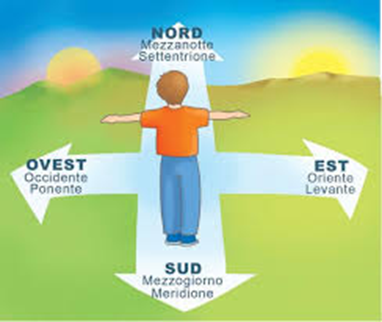
Si deve iniziare con i quattro punti cardinali, cioè il nord o settentrione, il
sud o meridione, l'est o oriente e l'ovest o occidente.
Il Meridione è il punto cardinale corrispondente al sud e deriva dal termine
latino “meridiem”, l’orario del mezzogiorno. La ragione è dovuta al fatto che
a quell’ora del giorno il sole si trova verso sud per tutti i popoli dell’emisfero
nord (anche detto boreale o settentrionale). Per questa ragione il Meridione è
anche chiamato il Mezzogiorno.
La parola Settentrione deriva dal termine latino “septemtriones” che significa
i sette buoi da lavoro, il modo in cui i romani antichi chiamavano le sette
stelle della costellazione Orsa Maggiore o Gran Carro.
Where do the nouns “Meridione” and “Settentrione” come from? These are
the names used to call Southern Italy and Northern Italy respectively.
We have to begin with the four cardinal or compass points, in other words:
North (or settentrione in Italian), South (or meridione in Italian), East and
West.
Meridione is the cardinal point which corresponds to the south and takes its
name from the Latin “meridiem”, the noon hour. The reason is due to the
fact that at that time of day the sun can be found towards the south for all
peoples who inhabit the northern hemisphere. For this reason, Meridione is
also called Mezzogiorno (noon).
The word Settentrione comes from the Latin “septemtriones” which means
the seven oxen, the way in which the ancient Romans called the seven stars
of the Constellation Ursa Major or Great Cart.
Saturday, March 8, 2025
|
|
| |
Queste quattro parole spesso confondono gli studenti americani perché se
guardano nel loro dizionario per la traduzione di “good” trovano almeno
queste possibilità.
Così vale la pena ripassarne l’uso un’altra volta.
Bravo quando è usato da aggettivo, descrive esseri viventi: persone o
animali, le loro qualità, abilità, il loro valore. Non è usato per descrivere
cose inanimate.
- Gemma è una brava cuoca.
- Fido è un bravo cane.
- Alessandra e Diana sono brave studentesse.
- Cristoforo e Giacomo sono bravi pasticceri.
Buono quando è usato da aggettivo, esprime un giudizio, descrive una qualità:
- Abbiamo mangiato dei buoni biscotti e bevuto un buon caffè per colazione.
- Cristina è proprio una buon’amica.
- Hanno fatto un buon affare quando hanno comprato quella casa in città.
- Questo sciroppo è buono per la tosse.
Bello è un aggettivo che descrive un aspetto estetico di un sostantivo o
esprime un giudizio positivo. Ricordiamoci che qui stiamo parlando della
traduzione a “good” in inglese, non a “beautiful”.
- Sabato scorso abbiamo visto un bel film.
- Leggiamo delle belle novelle di Luigi Pirandello in classe.
- Ieri ha fatto bel tempo.
Bello è anche usato per intensificare un’idea:
- Mi sono preparata un bel piatto di spaghetti alle vongole.
- Fa un freddo cane, mi faccio una bella doccia per riscaldarmi.
- Marco ha deciso di farsi un bel pisolino prima di uscire questa sera.
- Hai combinato proprio un bel guaio.
Bene invece è un avverbio e perciò descrive un verbo o un aggettivo.
- Abbiamo mangiato bene a casa vostra domenica scorsa, grazie mille.
- L’esame è andato bene, benissimo, infatti, Teresa ha ricevuto 30 e lode.
- Oggi tutto va da bene in meglio, che fortuna!
- Dopo 24 ore senza sonno, loro hanno dormito proprio bene.
La confusione subentra quando incontriamo espressioni come:
These four words often confuse American students because if they look up
the translation for “good” in their dictionaries they will find at least these
four possibilities: bravo, buono, bello, or bene. Therefore, it’s a good idea
to review their uses once again.
Bravo when it is used as an adjective describes living things: persons or
animals. It is not used to describe inanimate objects.
- Gemma is a good cook.
- Fido is a good dog.
- Alessandra and Diana are good students.
- Cristoforo and Giacomo are good bakers.
Buono when it is used as an adjective expresses a judgment or describes a
quality.
- We ate several good cookies and drank good coffee for breakfast.
- Cristina is really a good friend.
- They made a good deal when the bought that house in town.
- This cough syrup is really good (for coughs).
Bello is an adjective that describes an esthetic aspect of a noun or
expresses a positive judgment. Remember that we are referring to the
translation of “good” from the English, not “beautiful”.
- Last Saturday we saw a good movie.
- We are reading some good short stories by Luigi Pirandello in class.
- Yesterday the weather was good.
Bello is also used to intensify an idea:
- I prepared a nice plate of spaghetti with clams for myself.
- It’s freezing; I’m going to take a nice shower to warm myself up.
- Marco decided to take a nice nap before going out this evening.
- You sure did make a big mess.
Bene on the other hand, is an adverb and therefore describes a verb or an
adjective.
- We ate well at your house last Sunday, thank you very much.
- The exam went well; very well in fact, Teresa received an A+.
- Today everything is getting better and better, what luck!
- After 24 hours without sleep, they slept really well.
Confusion can occur when we come across expressions like:
- The bravi in Alessandro Manzoni’s novel The Betrothed are bad guys.
- The store gave me a coupon rather than a refund.
I never have a minute of peace and quiet when they come to visit me.
Saturday, February 22, 2025
|
|
 I PUPI SICILIANI—Parte III I PUPI SICILIANI—Parte III
Se vi ricordate, vi ho detto che mentre facevo delle ricerche sul
tema di marionette, burattini e pupi ho trovato, sul sito del
Comune di Catania, un articolo interessante intitolato Storia dei
Pupi Siciliani scritto dal Prof. Alessandro Napoli. Avendo introdotto
il tema e elencato gli elementi della tradizione palermitana, oggi
esaminiamo quelli della tradizione catanese.
[https://www.comune.catania.it/la-citta/tradizioni/pupisiciliani]
LA TRADIZIONE CATANESE
-
Dimensioni dei pupi: da cm. 80 fino a m.1.30 di altezza.
-
Peso: fino a Kg. 35 circa.
-
Caratteristiche della meccanica: gambe rigide, senza snodo al
ginocchio; se il pupo è un guerriero, la spada è quasi sempre
impugnata nella mano destra.
-
Sistema di manovra: dall’alto di un ponte posto dietro i fondali
(‘u scannappoggiu): gli animatori sorreggono i pupi
poggiando i piedi su una spessa tavola di legno sospesa a
circa un metro da terra (‘a faddacca).
-
Spazio scenico: superficie d’azione dei pupi più larga che
profonda: gli animatori, camminando sul ponte di animazione,
possono seguire senza problemi il pupo per tutta la
larghezza della scena.
-
Concezione teatrale e dello spettacolo: più tragica, sentimentale e realistica.
If you remember, I told you that while I was researching the topic
of marionettes and puppets, I found, on the website of the City of
Catania (Sicily), an interesting article entitled The History of the
Sicilian Puppets written by Professor Alessandro Napoli. Having
introduced the topic and listed the elements of the tradition in the
city of Palermo, today we will examine the tradition in the city of
Catania.
[https://www.comune.catania.it/la-citta/tradizioni/pupisiciliani]
-
The pupi range from 80 centimeters to 1.30 meter in height.
-
They weigh up to 35 kilos.
-
Mechanical characteristics: they have rigid knees, without a
juncture; if the pupo is a warrior, the sword is nearly always
held in the right hand.
-
System of operation: from a bridge suspended above the
backdrop (called ‘u scannappoggiu), the puppeteers rest
their feet on a thick plank of wood suspended about 1 meter
aboveground (called ‘a faddacca).
-
The stage: the surface where the action takes place is wider
than it is deep; the puppeteers walking along the animation
bridge can follow the pupo along the entirety of the set with
no problem.
-
Theatrical and spectacle conception: more tragic, sentimental
and realistic.
|
Saturday, February 8, 2025
|
|
Se vi ricordate, la volta scorsa vi ho detto che mentre facevo delle
ricerche sul tema di marionette, burattini e pupi ho trovato, sul
sito del Comune di Catania, un articolo interessante intitolato
Storia dei Pupi Siciliani scritto dal Prof. Alessandro Napoli. Oggi
esaminiamo gli elementi della tradizione palermitana.
[https://www.comune.catania.it/la-citta/tradizioni/pupisiciliani]
LA TRADIZIONE PALERMITANA
-
Dimensioni dei pupi: da cm. 80 a un metro di altezza.
-
Peso: fino a Kg. 8 circa.
-
Caratteristiche della meccanica: ginocchia articolate; se il
pupo è un guerriero, la spada si può sguainare e riporre nel
fodero.
-
Sistema di manovra: dai lati, a braccio teso: gli animatori sono
posizionati dietro le quinte laterali del palcoscenico e
poggiano i piedi sullo stesso piano di calpestio dei pupi.
-
Spazio scenico: superficie d’azione dei pupi più profonda che
larga: la larghezza della scena è limitata dalla possibilità degli
animatori di sporgersi dalle quinte senza farsi vedere dai lati.
-
Concezione teatrale e dello spettacolo: più stilizzata ed
elementare.
~~~~~~ ~~~~~~ ~~~~~~
If you remember, last time I told you that while I was researching
the topic of marionettes and puppets, I found, on the website of
the City of Catania (Sicily), an interesting article entitled The
History of the Sicilian Puppets written by Professor Alessandro
Napoli. Today we will look at the tradition in the city of Palermo.
[https://www.comune.catania.it/la-citta/tradizioni/pupisiciliani]
THE TRADITION OF THE PUPI FROM PALERMO:
-
The pupi range from 80 centimeters to 1 meter in height.
-
They weigh up to approximately 8 kilos.
-
Mechanical characteristics: they have articulated knees, and
if the pupo is a warrior, the sword may be unsheathed and
placed back in its scabbard.
-
System of operation: from the sides and stiff-armed, the
puppeteers are placed behind the lateral scenery of the
stage, resting their feet on the same planking level of the
pupi.
-
The stage: the surface where the action takes place is
deeper than it is wide; the width of the scene is limited by the
abilities of the puppeteers to lean over the scenery flats
without being seen from the sides.
-
Theatrical and spectacle conception: more stylized and |elementary.
|
Saturday, January 25, 2025
|
|
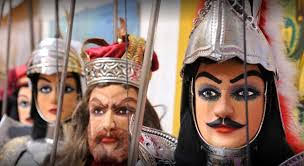
Mentre facevo delle ricerche sul tema di marionette, burattini e pupi ho
trovato, sul sito del Comune di Catania, un articolo interessante
intitolato Storia dei Pupi Siciliani scritto dal Prof. Alessandro Napoli. Ve
lo offro in varie fasi: per prima, l’introduzione generale, poi informazioni
sulla tradizione palermitana e in fine la tradizione catanese.
[https://www.comune.catania.it/la-citta/tradizioni/pupisiciliani]
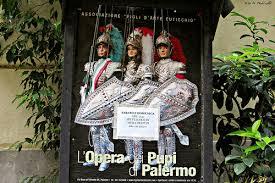
L’Opera dei Pupi è un particolare tipo di teatro delle marionette che si
affermò stabilmente nell’Italia meridionale e soprattutto in Sicilia tra la
seconda metà dell’Ottocento e la prima metà del Novecento.
I pupi siciliani si distinguono dalle altre marionette essenzialmente per
la loro peculiare meccanica di manovra e per il repertorio, costituito
quasi per intero da narrazioni cavalleresche derivate in gran parte da
romanzi e poemi del ciclo carolingio.
Le marionette del Settecento venivano animate dall’alto per mezzo di
una sottile asta metallica collegata alla testa attraverso uno snodo e
per mezzo di più fili, che consentivano i movimenti delle braccia e delle
gambe. In Sicilia, nella prima metà dell’Ottocento, un geniale artefice
di cui ignoriamo il nome escogitò gli efficaci accorgimenti tecnici che
trasformarono le marionette in pupi.
Egli fece in modo che l’asta di metallo per il movimento della testa non
fosse più collegata ad essa tramite uno snodo, ma la attraversasse
dall’interno e - cosa ben più importante - sostituì il sottile filo per
l’animazione del braccio destro con la robusta asta di metallo,
caratteristica del pupo siciliano. Questi nuovi espedienti tecnici
consentirono di imprimere alle figure animate movimenti più rapidi,
diretti e decisi, e perciò particolarmente efficaci per “imitare” sulla
scena duelli e combattimenti, che tanta parte avevano nelle storie
cavalleresche.
Esistono in Sicilia due differenti tradizioni, o “stili”, dell’Opera dei Pupi:
quella palermitana, affermatasi nella capitale e diffusa nella parte
occidentale dell’isola, e quella catanese, affermatasi nella città etnea
e diffusa, a grandi linee, nella parte orientale dell’isola ed anche in
Calabria. Le cronache raccontano che l’iniziatore dell’Opera a Catania fu
don Gaetano Crimi (1807 - 1877), il quale aprì il suo primo teatro nel
1835.
Le due tradizioni differiscono per dimensioni e peso dei pupi, per alcuni
aspetti della
meccanica e del sistema di manovra, ma soprattutto per una diversa
concezione teatrale e dello spettacolo, che ha fatto sì che nel catanese
si affermasse un repertorio cavalleresco ben più ampio di quello
palermitano e per molti aspetti diverso.
While I was researching the topic of marionettes and puppets, I found,
on the website of the City of Catania (Sicily), an interesting article
entitled The History of the Sicilian Puppets written by Professor
Alessandro Napoli. I will share it with you in various phases: firstly, a
general introduction, then information on the tradition in the city of
Palermo and finally the tradition in the city of Catania.
[https://www.comune.catania.it/la-citta/tradizioni/pupisiciliani]
The “Pupi Opera” is a specific type of marionette theatre that
formalized in Southern Italy, and mostly in Sicily between the second
half of the 1800’s and the first half of the 1900’s. Sicilian Pupi, set
themselves apart from other marionettes essentially for their specific
way of movement and for the repertoire, which is composed almost in
its entirety of stories of knights is derived mostly from tales and poems
of the Carolingian Cycle.
The marionettes from the 1700’s were animated from above via a thin
metal wand tied to the head by means of a junction or intersection and
many strings, which allowed movement of the arms and legs. In Sicily,
during the first half of the 1800’s, a brilliant artisan, whose name we do
not know, devised the useful techniques that transformed the
marionettes into Pupi.
He enabled the metal wand that controlled the movements of the head
to no longer be connected by a junction, rather traversing it from the
inside and—a far more important thing—substituting the thin thread
that animated the right arm with the strong metal wand, characteristic
of the Sicilian Pupo. These new technical devices gave the animated
figures movements that were more rapid, direct and decisive, and,
therefore, particularly efficacious to “imitate” on the stage the duels
and fights, which had comprised so many of the chivalric tales.
In Sicily there are two different traditions or “styles” of the Theatre of
the Pupi: the one from Palermo established in the capitol and spread
throughout the western part of the island, and the one from Catania,
established in the city near Mount Etna and spread, for the most part in
the eastern part of the island and even in Calabria. Stories are told
that the founder of the Theatre in Catania was Don Gaetano Crimi
(1807-1877) who opened his first theatre in 1935.
The two traditions differ in the size and weight of the pupi, according
to certain aspects of their mechanics and their system of movement,
but most of all due to a different theatrical conception of the show or
spectacle, that enabled the Catania theatre to establish a knightly
repertoire which is much broader than the one from Palermo and in
many ways, different from it.
Saturday, January 11, 2025
|
|

UN BRINDISI, CINCIN, ALLA SALUTE…
Brindare, (secondo vari vocabolari: Treccani, Garzanti Linguistica, e La
Repubblica) significa:
1. gesto che consiste nell’alzare e toccare insieme i bicchieri prima di bere. È un
invito a bere alla salute o in onore di qualcuno o come buon auspicio [seguito
dalle preposizioni a, per]. Per esempio: fare, proporre un brindisi al festeggiato,
per la vittoria, in onore di un ospite, ecc.
2. breve componimento poetico improvvisato, che si recita al momento del
brindisi.
3. in musica: Aria cantata nelle scene conviviali. (Per esempio: “Libiamo”
dall’opera La Traviata di Giuseppe Verdi.)
Quando brindiamo diciamo alla salute, cent’anni, o cincin.
La parola “brindisi” deriva dal tedesco: (ich) bring(e) dir’s: lo porto, lo offro a te
(il bicchiere, il saluto). Mentre, l’espressione cincin deriva dal cinese mandarino
di Pechino: ch’ing-ch’ing significa prego-prego.
E ora il mio brindisi:

MAKE A TOAST, DRINK TO SOMEONE’S HEALTH…
The Italian word “brindare” (according to various dictionaries: Treccani, Garzanti
Linguistica, and La Repubblica) refers to:
1. A gesture consisting of raising and touching glasses prior to drinking. It is an
invitation to drink to someone’s health, or in honor of someone, or for good
wishes [in Italian the word is followed by the prepositions “a/to”, “per/for”]. For
example: propose a toast to the birthday girl/boy, victory, the guest of honor, etc.
2. Brief poetic and spontaneous composition that is recited at the time of the
toast.
3. In music: an aria sung in convivial scenes. (For example: “Libiamo” from the
opera La Traviata by Giuseppe Verdi.)
When we toast we say: to health, 100 years, or cincin.
The word “brindisi” derives from the German: (ich) bring(e) dir’s I bring, I offer
to you (the glass, the wish). While the expression cincin comes from the
mandarin Chinese spoken in Beijing: ch’ing-ch’ing means please-please.
And now my toast: (a wish for peace and serenity, not only for New Year’s Day,
but for the entire coming year.)
HAPPY NEW YEAR TO ALL!
Saturday, December 28, 2024
|
| |
|
|
|
|